A Beginner’s Guide to Your First Time Camping With Kids
There’s something so lovely about a family camping trip. Eating breakfast outside, enjoying the fresh air and watching the children make their own fun can make even a short break feel special. Camping is a great way to spend quality time together, with fewer distractions and more opportunities to enjoy the great outdoors, and we enjoy it so much.

But if you’ve never camped as a family before, the planning and execution can feel a bit overwhelming. What sort of tent do you need? Will anyone actually sleep? And how do you feed hungry children when your camp kitchen consists of a camping stove and a plastic box?
You don’t need to buy every camping gadget or head off into the wilderness for the whole family to have a great time when you’re camping with kids. A short stay at a well-equipped campsite is a lovely place to start. With a little preparation and realistic expectations, your first family camping trip can be the beginning of something you all look forward to.
Keep Your First Camping Trip Short and Simple
One of the first things to decide is how long to go for. For your first camping trip, one or two nights is really enough to get a feel for camping without committing to a whole week. Choose somewhere close enough to home that the journey won’t leave everyone exhausted before you’ve even unpacked the car.
It also helps to pick a time when you’re likely to have reasonably mild weather. You can’t guarantee sunshine in the UK, but learning how to pitch a tent during strong winds isn’t the gentlest introduction to camping!
Think about the type of camping that would suit you, too. Car camping, where you drive your equipment to a campsite and sleep in a tent, is a straightforward option for new campers. Easy access to the car makes unpacking simpler and gives you somewhere to keep spare supplies. You don’t need a rooftop tent or a campervan to get started, or even if you become camping enthusiasts.
Try not to fill the weekend with plans. Putting up the tent, making dinner and finding your way around the campsite all take longer when you’re doing them for the first time. One nearby outing and plenty of time to relax is a perfectly good itinerary.
Choose a Campsite That Makes Family Life Easier
A beautiful view is a bonus, but practical facilities can make a much bigger difference to your first camping experience. Clean facilities, hot showers and somewhere to wash up are a good starting point. Check whether the toilets are permanent facilities or portable toilets, and whether the showers cost extra (make sure you take some change with you if they do).
Before booking, check:
- Whether the site welcomes families and has quiet hours.
- How far the toilets are from the camping pitches.
- Whether there is drinking water and a washing-up area.
- Whether you can park beside your tent or need to carry everything from a car park.
- Whether pitches are allocated or you choose your own spot.
- Whether there is a shop, café or supermarket nearby.
- Whether barbecues and campfires are allowed.
- Whether there are extra charges for children, cars, dogs or electricity.
Look at recent reviews, particularly from other families. Play areas might be useful, but so is knowing whether the campsite gets noisy late at night.
Particularly during peak camping seasons, such as the school summer holidays, book ahead if you have particular dates or facilities in mind. However, when it comes to camping, I would always book ahead if possible, as you don’t want to end up with nowhere to stay or be putting your tent up at midnight once you finally do find somewhere.
Campsites in or near national parks can make a lovely base for walks and outdoor activities. However, don’t assume that land described as public land or open-access land is somewhere you can pitch a tent. Check the local rules and permissions, or book an established campsite. The National Parks website explains why camping rules vary.
If you’re bringing your dog, check the rules before booking, including where dogs are allowed and whether they must remain on a lead.
Borrow Equipment Before Buying Everything
Camping can be an affordable way to get away, but the first shopping trip can soon become expensive. Before buying a full set of equipment, see what you can borrow from friends or family.
A borrowed tent, camping chairs and stove can help you work out what suits you (and whether you actually enjoy camping in the great outdoors!) before spending much on your own gear. Just check everything beforehand, ask for the instructions and make sure any cooking equipment is in good condition.
You can also use plenty of things from home. You don’t need special camping plates if you already have sturdy picnic ones, and a familiar pillow can make sleeping in a tent much more comfortable.
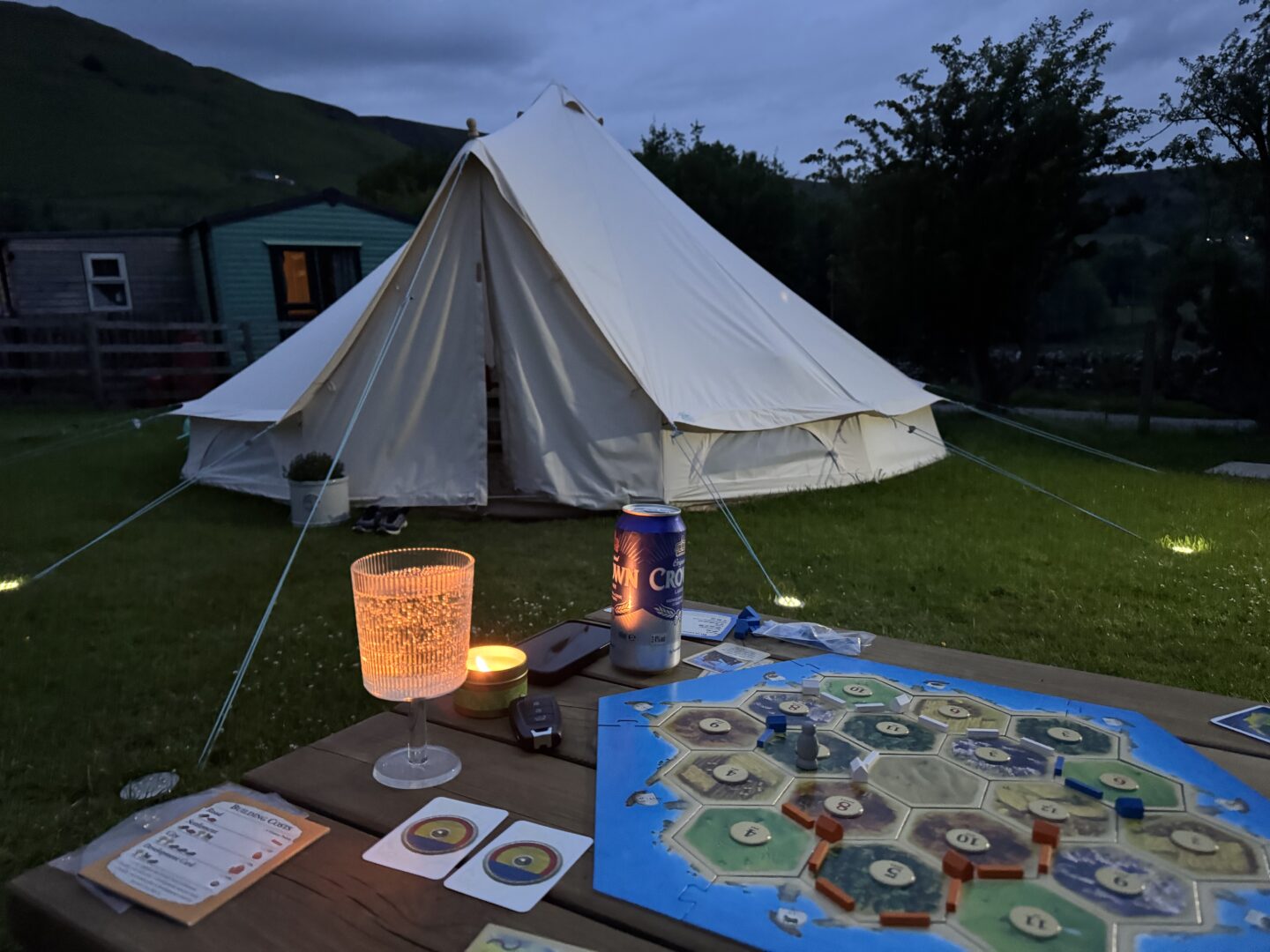
If you’re unsure about tent camping, a pre-pitched tent or even a bell tent that’s all set up for you could be a useful first step. Check exactly what’s included, as you may still need to bring bedding and cooking equipment. It’s a more expensive way to do a camping trip, but it means you can find out whether you enjoy sleeping in a tent and having to go outside to the loos before you do it all yourself. Do bear in mind, though, that sleeping in a bell tent on camp beds is not the same as sleeping on a blow-up bed on the floor of your tent!
Choose a Tent With Enough Usable Space
The best family tents are the ones that fit your family, your car and the way you’ll use them. A tent’s advertised capacity doesn’t necessarily tell you how comfortable it will be for a family. A four-person tent might fit four sleeping spaces but leave very little room for bags, shoes and the general collection of things children seem to travel with, so I would always go for a higher-berth tent than the number of people you’re taking.
Look at the floor plan and measurements, rather than relying only on the number of people on the label. Think about whether your sleeping mats will fit and where the dog will sleep, where you’ll keep your belongings and whether there’s somewhere to sit if it rains.
Separate bedrooms can be useful, while enough height to stand up makes getting dressed easier. A covered entrance is handy for muddy shoes, although it should never become a place to cook with a camping stove or barbecue.
Check the packed size, too. A roomy tent isn’t much use if it takes up the entire boot and leaves nowhere for the rest of your kit.
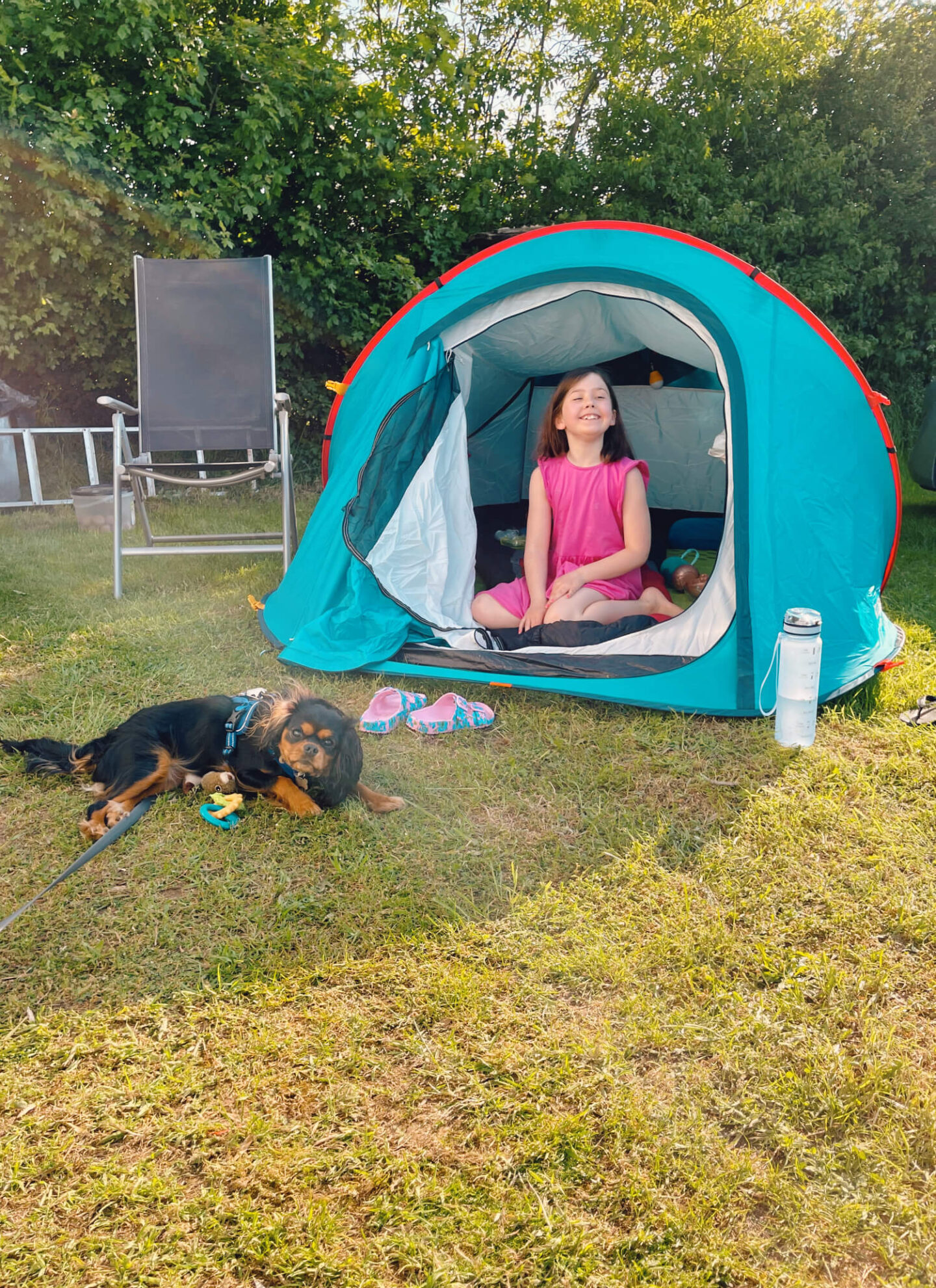
For shorter trips that we want to keep simple, we have a couple of pop-up tents that are really quick to put up, and we would take the bare minimum. But if we’re camping for a few days or even a couple of weeks, we need our big tent to fit the dog crate, us and all our stuff in and have somewhere to sit when it’s raining or freezing and play games together comfortably.
We have the Berghaus Telstar 8 Nightfall Air Tent, which we’ve had for a couple of years now, and we can stand up inside it, which makes such a difference when you’re camping regularly and for longer. It’s brilliant having more space, and we can all sit comfortably on chairs in the main living area. Plus, with three of us and our dog in her crate, we each have plenty of space in the bedroom. However, it’s an investment, and certainly not something you need when you first start camping. It’s also massive, and only fits in our car sat up like a person in the back!
Practise Putting Up the Tent Before You Go
If possible, choose a dry afternoon to put the tent up in the back garden before your trip. Otherwise, find a suitable space where you have permission to practise.
This gives you a chance to check that all the poles, pegs and guy ropes are there, work out the instructions and spot any damage. It’s much easier to deal with a missing part at home than when the children are hungry, and daylight is disappearing fast..
Practise packing it away as well. Getting a tent back into its bag can be a surprisingly large part of the challenge! It’s one of my least favourite bits of packing up!
On arrival, follow the campsite’s pitching instructions and leave the required space between tents – you really don’t want to be putting your tent up more than once! Try to arrive with enough daylight to get settled without rushing. If you have young kids camping, give them a snack and a simple activity within sight while the adults tackle the setup. They can help put sleeping bags and lighter things into the tent once you have it up.
Put Some Thought Into Sleeping Comfortably
Being tired and cold can take the fun out of camping very quickly, so your sleeping setup deserves attention.
Everyone needs something suitable to sleep on, such as an insulated camping mat or a camping mattress with appropriate insulation underneath. An airbed on its own may feel comfortable but can still leave you cold.
Choose sleeping bags for the expected overnight temperatures, looking at the comfort rating rather than the extreme rating. Cold nights can catch you out even after a warm day. Bring dry nightwear, extra socks and familiar pillows, and keep bedding protected from rain during the journey and while you set up.
Extra blankets are useful for adults and older children when sitting outside in the evening, but they shouldn’t be a substitute for suitable sleeping equipment.
For younger kids, a favourite teddy and their usual bedtime story can help the tent feel less unfamiliar. Summer evenings are light, and campsites have different noises from home, so allow a little flexibility around bedtime.
If you already use a white noise machine at home, a battery-powered version might help you keep a familiar bedtime routine. Keep the volume low and be considerate of neighbouring tents, though.
If you’re camping with a baby, plan a separate, suitable sleep space, such as an appropriate travel cot, and follow the Lullaby Trust’s safer-sleep advice for holidays. Use the cot as instructed, with a firm, flat mattress, and don’t add padding or adult bedding.
Camping With Kids Checklist: What to Pack
It’s tempting to pack for every possible situation, but too much equipment makes everything harder to find. Start with the essentials and add the things that will make your particular family comfortable.
Use this camping checklist as a starting point for your list of essential camping gear:
- Tent, poles, pegs, guy ropes and a mallet.
- Sleeping bags, suitable mats or mattresses, and pillows.
- Waterproof coats, warm layers and spare clothes.
- Comfortable shoes, plus wellies if the ground is likely to be muddy.
- Camp chairs and a small table, unless your pitch has a picnic table.
- Torches or head torches, a battery-powered lantern and spare batteries.
- Your own food, refillable water bottles and a suitable cool box with ice packs.
- Cooking equipment and compatible fuel, if you plan to cook.
- Plates, mugs, cutlery, a tin opener and basic utensils.
- Washing-up supplies, tea towels and rubbish bags.
- Toiletries, towels, sun cream, age-appropriate bug spray and any regular medicines.
- A basic first aid kit.
- A few board games, books and comfort items.
- A wet bag or waterproof bag for damp clothing.
Keep waterproofs, snacks, torches and the tent equipment easy to reach. A duffel bag or packing cube for each person’s clothes, plus labelled boxes for shared camp gear, can also save you searching through the entire car or tent for a teaspoon. Give older kids their own packing list and let them check it with you before leaving.
Keep Camping Meals Easy
Your first camping trip probably isn’t the time to attempt an elaborate three-course dinner. Choose meals your family already enjoys that need little preparation and washing up.
Your camp kitchen can be very simple: a suitable stove, a saucepan, a few utensils and somewhere stable to prepare food.
Wraps, sandwiches, cereal and fruit are easy options. For cooked meals, pasta with a simple sauce, beans on toast, or soup with bread can work well with a basic stove. Hot dogs in buns (cobs to us Nottingham folk!) can be another easy option, provided they’re stored and prepared according to the packet instructions. Choose age-appropriate food and preparation for young children.
Plan the first evening’s meal before leaving home and take something you can eat without cooking if you arrive late or the weather makes cooking outside impractical. A chilli cooked the previous day at home makes a great first evening meal – just take some tortilla chips with you to have with it. Knowing there’s a nearby café, takeaway or restaurant can be reassuring, too.
Keep perishable food properly chilled, store raw food separately, and take smaller quantities if you don’t have reliable refrigeration. A portable fridge is an option if you have a suitable power supply, but it isn’t essential for a short stay with a carefully planned menu and a well-managed cool box. We usually take our cool box and buy bags of ice and any fridge food we need as we go. But some campsites do have fridges that you can share now.
Bring enough snacks to cover the journey, setting up and those moments when dinner takes longer than expected.
And don’t forget what you need for your morning cup of tea. It’s a small thing that can make a chilly start feel much nicer.
Make Camping Safety Part of the Setup
Fire safety is one of the most important things to think about before your first family camping adventure. Always use camping stoves and barbecues outdoors, well away from the tent and anything that could catch fire. Never bring a barbecue into a tent or awning, even after cooking has finished: a cooling barbecue can still give off dangerous carbon monoxide. Don’t use fuel-burning appliances to heat the tent, either.
The Camping and Caravanning Club’s camping safety advice is worth reading before your trip. Keep any open flame away from children and flammable materials, and follow the campsite’s rules. Use battery-powered lighting instead of candles, and keep children away from the cooking area and the firepit if you have one.
When you arrive, set rules together. Show the children where the toilets are, agree how far they can go and explain that they mustn’t walk through other people’s pitches. Point out guy ropes, roads and any nearby water, and supervise them according to their age and the surroundings.
Keep your phone charged and know the campsite’s address and emergency arrangements. If you book an electric hook-up, use purpose-made camping equipment and read the Camping and Caravanning Club’s guidance on using electricity in a tent.
Have a Plan for Wet Weather
A little rain doesn’t have to spoil your trip, but it helps to be prepared. Pack waterproofs, spare clothes and bags for wet or muddy things, and keep one complete change of clothing dry and separate for each person.
Check the weather forecast and weather warnings before travelling, paying attention to wind and overnight temperatures as well as rain. The Met Office’s advice on camping in wet and windy weather has useful pointers on pitching and preparation.
Have a few indoor activities in mind nearby for a rainy day, and bring card games, colouring things or a small board game for quiet time in the tent.
There’s also nothing wrong with postponing your trip or heading home early if conditions become unsafe or everyone is miserable. You’re there to enjoy a family break, and you can try again another weekend if you want to.

Leave Room for the Simple Things
You don’t need to entertain the children every minute. The best part of camping can be having time for the things you usually rush past: watching a bird gather twigs, enjoying the evening sky without a phone in your hand or eating breakfast together without worrying about the school run.
Nature scavenger hunts are an easy way to keep little adventurers interested on a walk. Ask them to spot something yellow, a feather or three different leaf shapes, leaving plants and wildlife undisturbed. Older kids might enjoy planning a walking route or learning to recognise birds.
Help children enjoy the natural environment respectfully by watching wildlife from a distance and leaving what they find where it belongs.
Camping is a great opportunity to learn new skills. Let children help with age-appropriate camp chores, whether that’s laying out the sleeping bags, fetching their own plates or checking the pitch for forgotten pegs before you leave. Having a role can make the experience feel like an adventure you’re sharing.
Put electronic devices away for a while, too. You might still want photos and a weather forecast, but a few hours without scrolling can leave more time for conversations and those slightly ridiculous family games that become holiday memories.
Before leaving, clear your pitch, use the campsite’s rubbish and recycling facilities, and check for small bits of litter. If you have to pack the tent away wet, unpack and dry it thoroughly at home before storing it.
The best thing you can bring to your first family camping trip is a little flexibility. It doesn’t have to be perfect to be enjoyable. You might forget something, dinner might take longer than planned, and someone will almost certainly need the toilet just as you’ve settled into your sleeping bag.
A successful camping trip is one where everyone is safe, comfortable enough and has enjoyed spending time together. Start small, make warmth and comfort a priority, and give yourselves time to find your feet. A couple of nights outdoors, with simple meals and very little on the agenda, can be a lovely way to spend time together – and help you work out what you’d do differently next time and what you must remember to bring. You’ll soon learn which parts of the camping experience your family loves most.