Why So Many People Come to Calgary – and End Up Staying
I remember the day I told my friends back East I was moving to Calgary. Just for a year, maybe eighteen months tops.
There was a job, a bit of an adventure, and the promise of mountain weekends. I’d be back before anyone really noticed I was gone. That was seven years ago.
I wasn’t alone in thinking that way.
Calgary has become a net recipient of domestic migration since early 2023, adding nearly 8,000 households from domestic migration, but many who arrive treat the city like a stopover rather than a destination. The transience feels baked into the culture here. People introduce themselves with where they’re from originally, not where they live now. Conversations at dinner parties inevitably turn to timelines and exit strategies. Nobody seems to plan on staying forever.
The Pull of What You Didn’t Plan For
There’s something curious about how cities with reputations as temporary landing spots end up holding people longer than expected.
Calgary led the country in net interprovincial migration, with a gain of 26,662 residents from other provinces, yet the narrative remains the same. Everyone’s just passing through, even when the evidence says otherwise.
Part of what keeps people is work, obviously. But the quieter truth is that attachment sneaks up on you in ways you don’t anticipate. You find a coffee shop where the barista knows your order. You discover a hiking trail that becomes your Sunday ritual. Your apartment stops feeling like a placeholder and starts feeling like home, even if you’re not quite ready to admit it yet.
This survey, conducted by real estate expert Justin Havre and his team, explored how people identify with neighborhoods across North America and found that residents often connect most strongly with areas that carry visible history and character rather than newer developments.
Place attachments, defined as the bonding that occurs between individuals and their meaningful environments, remain important even in increasingly mobile societies, challenging conventional perspectives of fixed and bounded conceptions of place.
What surprised me most wasn’t that I started to care about Calgary, but that I started to care in specific, granular ways. I had opinions about which quadrant had the best community feel. I knew which streets flooded in spring. I’d learned the names of the peaks I could see from my kitchen window.
When Temporary Becomes Indefinite
Canadians aged 18 to 24 and 25 to 44 represent the most mobile age groups, with internal migrants 18 to 24 years old primarily moving to Canada’s urban centers while 25 to 44 year old migrants generally moved away from primary urban centers to neighboring suburban and exurban regions.
The migration patterns suggest constant movement, yet many who arrive with short-term plans find themselves caught in a different kind of inertia. The temporary plan stretches. One year becomes three. Three becomes five. Eventually, you stop mentioning the timeline altogether.
There’s a psychological dimension to this shift that researchers have documented across mobile populations.
High residential mobility tends to weaken place attachment, as individuals have less time to form deep emotional bonds with their physical environment and community, yet paradoxically, those who stay longer than intended often develop surprisingly strong ties precisely because they didn’t expect to.
I watched this happen with friends who arrived the same year I did. We’d meet for drinks and joke about our shared expat status, even though technically we were all still in Canada. We compared notes on which neighborhoods felt most like where we came from.
We celebrated small victories, like finally understanding how Plus-15 systems worked or learning to dress for minus-thirty mornings. Somewhere in that process, the city stopped being a backdrop and became part of our stories.
The Identity of In-Between
Living somewhere you never planned to stay creates a strange kind of identity. You’re invested but not committed. You know the city well enough to have favorites but still describe yourself as “not really from here.”
Everyday neighboring behaviors help bolster a feeling of belonging and attachment, yet existing neighborhood research suggests growing socio-spatial inequalities and decreased participation and social cohesion in cities across North America.
What’s interesting about Calgary specifically is how the city’s own identity mirrors this transience. It’s a place built on boom-and-bust cycles, on industries that draw people in waves. The architecture reflects it. Neighborhoods from different decades look like they belong to different cities entirely. There’s less of the accumulated patina you find in older places, less of the visual continuity that whispers “this is how we’ve always done things.” Instead, everything feels more provisional, more subject to change.
That provisional quality can be disorienting, but it also creates space for reinvention. When a city doesn’t have a fixed idea of itself, there’s room for newcomers to shape what it becomes.
Calgary has 219 distinct neighborhoods, each with its own character, housing market, and community identity, making the city attractive for those moving to Calgary for the first time or comparing areas for their next home.
What Stays With You
I still don’t know if I’ll be here in another seven years. The answer changes depending on the day you ask me. But I’ve stopped treating Calgary like a temporary arrangement. My books are on real shelves now, not in boxes.
I know which dentist to see and which mechanic won’t overcharge me. I’ve attended enough Stampedes that the novelty has worn off, replaced by something more durable: routine, familiarity, the quiet accumulation of years.
With mobility becoming a lifestyle, people experience a “mosaic of places” over their lifetime, and the life course approach explores how people attach to multiple places as they move through various stages of their lives.
Maybe that’s the real shift. It’s not that Calgary stopped being temporary. It’s that I stopped needing permanence to matter. The years I’ve spent here count, whether or not they turn into decades. The friendships are real. The memories are mine.
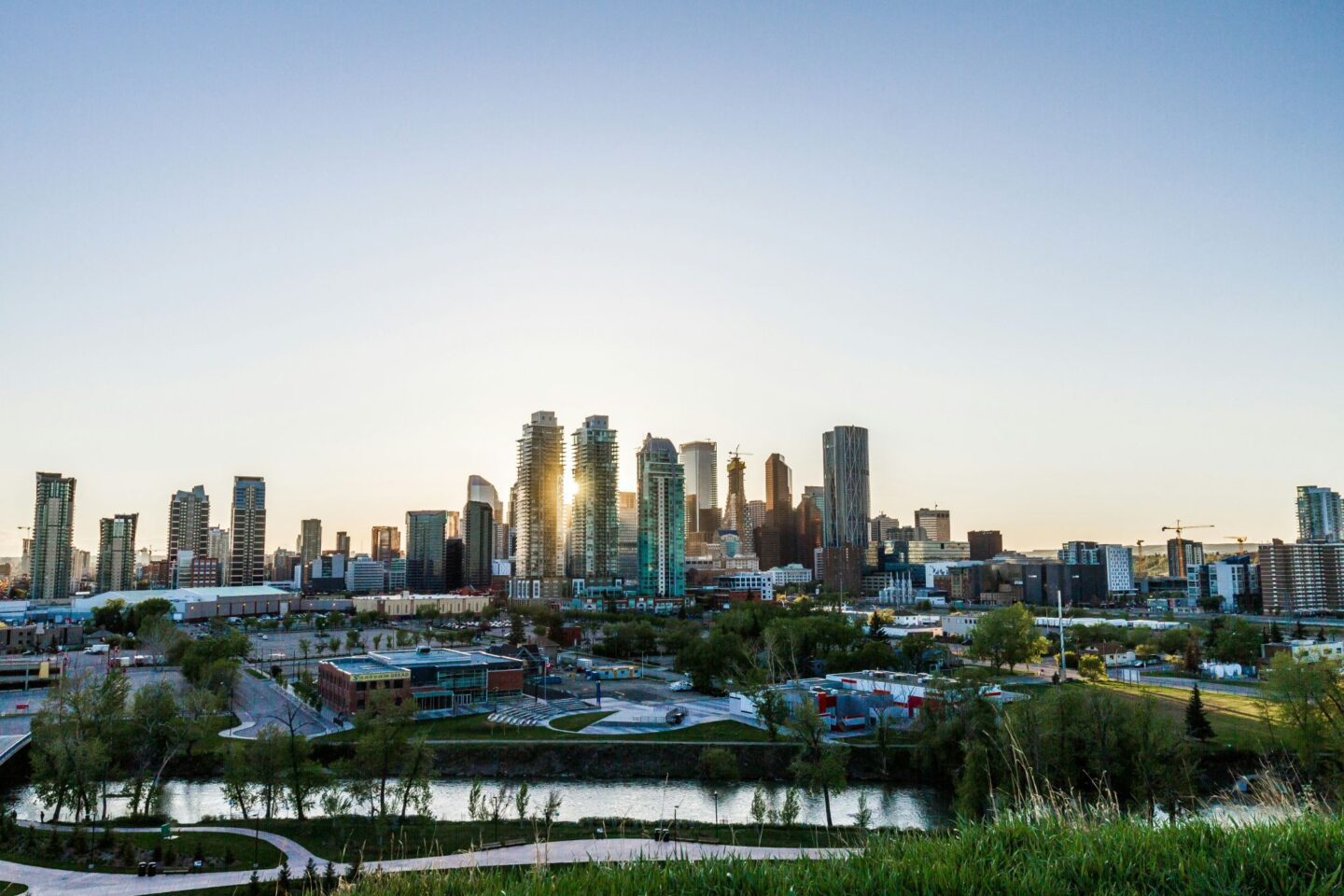
The city skyline looks different now than when I first arrived. New towers have gone up. Neighborhoods I remember as empty lots are full of houses. I’ve changed too, in ways that have nothing to do with geography and everything to do with time passing. But when I see those mountains from my kitchen window on a clear morning, I feel something I didn’t expect seven years ago.
Not quite ownership, but not quite distance either. Something in between, which seems fitting for a place that was only ever supposed to be temporary.
This is a collaborative post.