How to Create a Professional Home Studio Setup
A home studio is a great way of maximising your business as a recording artist or sound engineer. Whether you have a setup elsewhere that you rent out or you’re looking to create a space within your own home where you can do additional work, there are many perks to setting up a professional home studio space in your place.
With that being said, what do you need in order to create a professional studio that has everything you need? Building a home recording studio can be expensive and complex, so it’s important to know what you need and what you can avoid spending a lot of money on.

The cost of building a professional home recording studio
Typically, you would expect to spend around $30,000 for a home studio, especially if you’re looking for soundproofing and recording gear that’s top of the range. However, $30,000 is not something the average person can just take out of their bank account. There needs to be some compromises when it comes to finding the home recording equipment needed.
For budget-conscious individuals, you could set up a home recording studio for $500-$1,000 if y the right equipment was found at a good discount.
Things to consider when creating a professional home studio
In order to get the most out of your home studio setup, you need to factor in a number of things before you start.
The space
Space is something to consider carefully before you get any quotes in for the work needed. A dedicated room for a professional home studio setup is desired but not always necessary. However, if you do have a room where this could be solely used for a home studio, then it’s worth using that room for exactly that.
Soundproofing
Soundproofing is important, if not crucial because it helps to create high-quality recordings with little to no background noise. This can take up a huge amount of the budget, especially if you’ve got a big space that needs covering.
There are budget cuts you can make to your soundproofing, especially if you have a fairly quiet room located below ground level for example. You might find you only need so much soundproofing for it to be effective enough.
The equipment required
While a lot of recording studios have the same features and equipment, you might not need everything that is found in the average home studio.
For example, you might find that you only need a number of items to get started like a broadcast audio monitor and a microphone with a basic stand.
Common equipment found within a home studio
Regarding equipment required, every home studio is going to be different in terms of the type of equipment used and the level of equipment that’s required.
Knowing what you’ll need primarily to get your job done, whatever your role within music production, is going to help kit out your home studio with the best equipment needed.
When you know what you need, you can utilize your budget more effectively, especially if you’ve got some limitations when it comes to your finances. With that being said, here’s some of the common equipment found within a home studio.
Digital Audio Workstation
A digital audio workstation or DAW for short is a central recording software program and will be the hub in which all of your audio production happens. DAWs are digital versions of traditional recording studios and utilize a number of tools for recording, mixing, and editing the audio captured.
Such tools include any of the following:
- Garage Band
- Logic Pro
- Ableton Live
There are lots of options out there, so it’s definitely worth doing your research to see which ones are the best as an investment and which ones are more streamlined so that you can use perhaps just one or two applications instead of several.
Computer
Some people like working with a PC, while others like working with a Mac. Often it’s down to a personal preference but there are benefits and disadvantages to each so it’s worth doing your research to see which option works for you best.
When it comes to selecting the right computer, you want one that is quick and has a lot of flexibility, especially if you’re working on a lot of different tracks and projects at once.
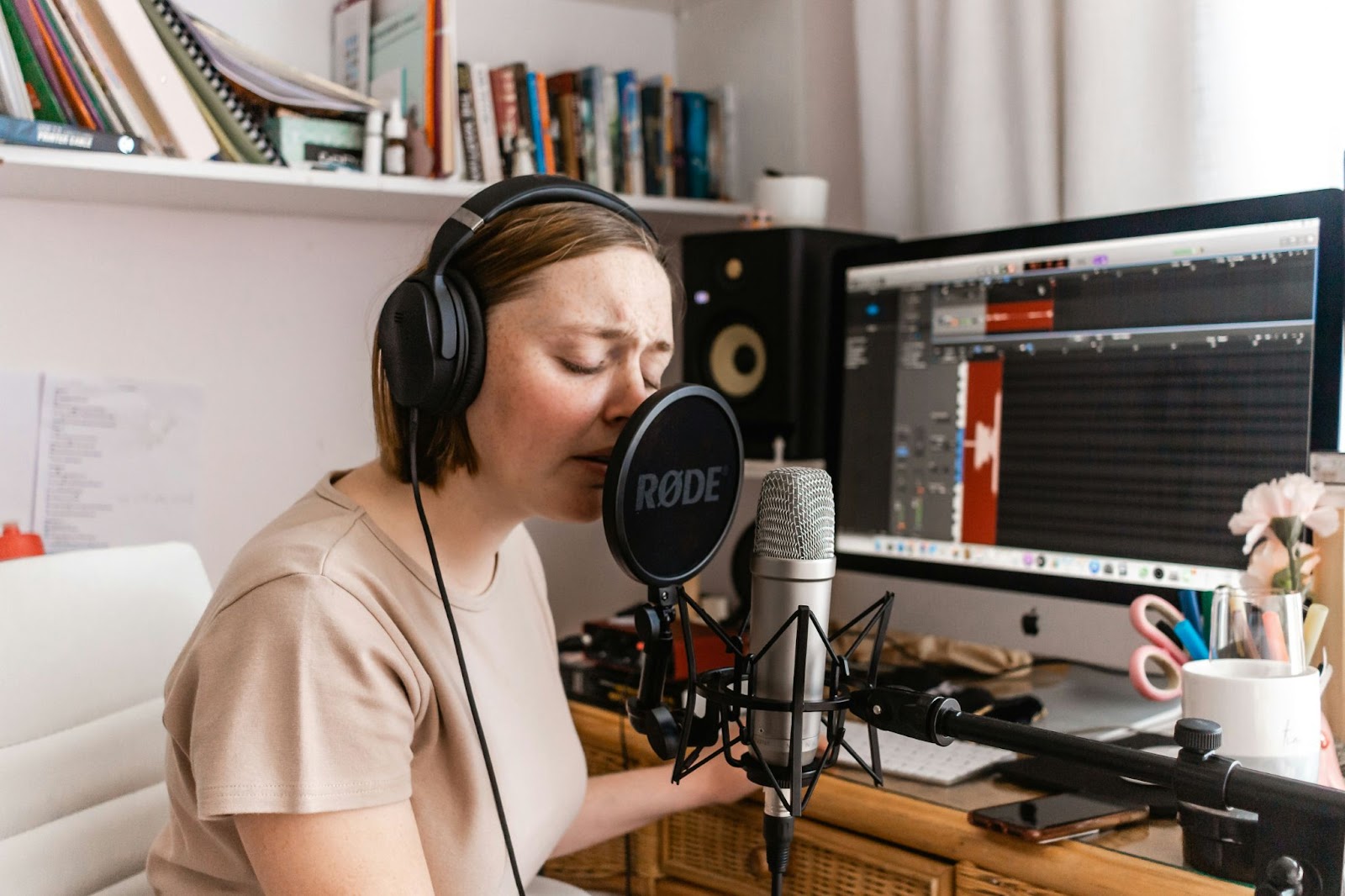
One thing to consider is the RAM, which is the amount of space the computer has and that often influences how productive your computer system is. Budget will play a big factor into how much RAM you have but 16GB of RAM is a good place to start.
CPU is another specification to consider when it comes to computer performance. With the demands of a recording studio, you’ll want to have at least an Intel Core i5 if possible.
SSD and HDD are two others to consider, so do your research to see what’s the best out there for your needs and budget.
Audio interface
The audio interface is an important element of your home studio because it helps you to connect all manner of audio equipment to it. From microphones to instruments, it’s a pretty important piece of tech.
When choosing your audio interface, consider what you’ll be adding to it as this will give you a better indication of what you need.
- Studio headphones – You should be looking at getting a good pair of headphones to help monitor recordings as well as for those who are recording vocals or music in general.
- Microphone and stand – You’ll want a microphone or two to help record vocals and acoustic instruments. Stands are also good to help keep your vocalists or musicians hands-free. You may also want to add filters to your microphone, as this can help with muffling any unwanted sounds.
- A midi controller – Midi controllers are helpful when you’re bridging the gap between yourself and the DAW controller. It can help make playing a lot easier and more natural.
Tips to build a home recording studio
So when it comes to creating a professional home studio setup, here’s everything you’ll need to build your home recording studio with ease.
- Pick out the right chair and desk
Firstly, be mindful about the chair and desk that you want. This is going to be the place you spend the most time in so you want to be comfortable.
Ergonomic chairs are the best because they’re going to support your body and therefore enable you to work longer hours without feeling a lot of discomfort. The right desk is going to be at the desired height but you also might want to look at standing desks to keep you moving from one position to another to avoid stiffness.
- Find the best soundproofing for your budget
Soundproofing is an absolute necessity but how much you’ll need will depend on the space and how soundproofed the room is already.
Some spaces might be located in areas of the home that are already quite quiet and therefore don’t need much. Whereas others might be right next to a main road or busy area, meaning you’ll want more soundproofing.
- Choose the equipment you need
The equipment is something you’ll want to be selective with, especially as there’s an abundance of equipment you could get, but you won’t likely need it all!
Do the research and take inspiration from any studios you might rent out. You’re likely going to be using the same equipment during each session, so you can cut out all of the unnecessary fluff around it.
- Be strategic with your furniture and equipment placement
The placing of your furniture and equipment is important. You want to make the room intimate but also spacious where possible. There are items of furniture and equipment that could be bulkier and therefore need to be placed in a way that makes the room more functional.
- Install your DAW
Your digital audio workstation is the next thing you’ll want to get onto when it comes to setting up the space. This means making sure you have all the relevant applications you need and investing in that software, some of which you might pay for outright and others you may pay for on a monthly basis.
- Pick the audio interface
The right audio interface is crucial because it’s something that you want to get in place so that everything is up and running and sounding great.
You should choose one that’s compatible with the rest of your setup, otherwise, you might have problems and need to adapt certain equipment to ensure it matches up with the interface and vice versa. Make sure you’ve got an audio interface that’s easily compatible with everything else.
- Get together the right cables, monitors, and other accessories
Finally, make sure you have all of the right cables, monitors, and other accessories that you’ll need in order to complete your home studio setup.
Hopefully, you’ll be able to create your dream home studio with the budget you have. Even if it’s restricted, you can get some semblance of a result when it comes to creating a home studio.
This is a collaborative post.