Bathroom Flooring Ideas for Your Next Renovation
When you’re planning a bathroom, it’s easy to spend ages choosing the bath, shower and taps, then give the floor much less thought. But it has a big effect on how the room looks and feels – and it has to cope with wet feet, daily cleaning and the occasional enthusiastic bath-time splash.

The right choice depends on more than the colour or pattern you like. A floor that works beautifully in a downstairs loo may be less practical in a busy family bathroom, while a walk-in shower needs particular attention to grip and drainage. It also sets the character of the whole space, whether it’s calm and minimal, warm and earthy, or unapologetically bold.
Here are four looks worth considering, along with the practical details to check before you order.
Keep Things Calm With Large-Format Tiles
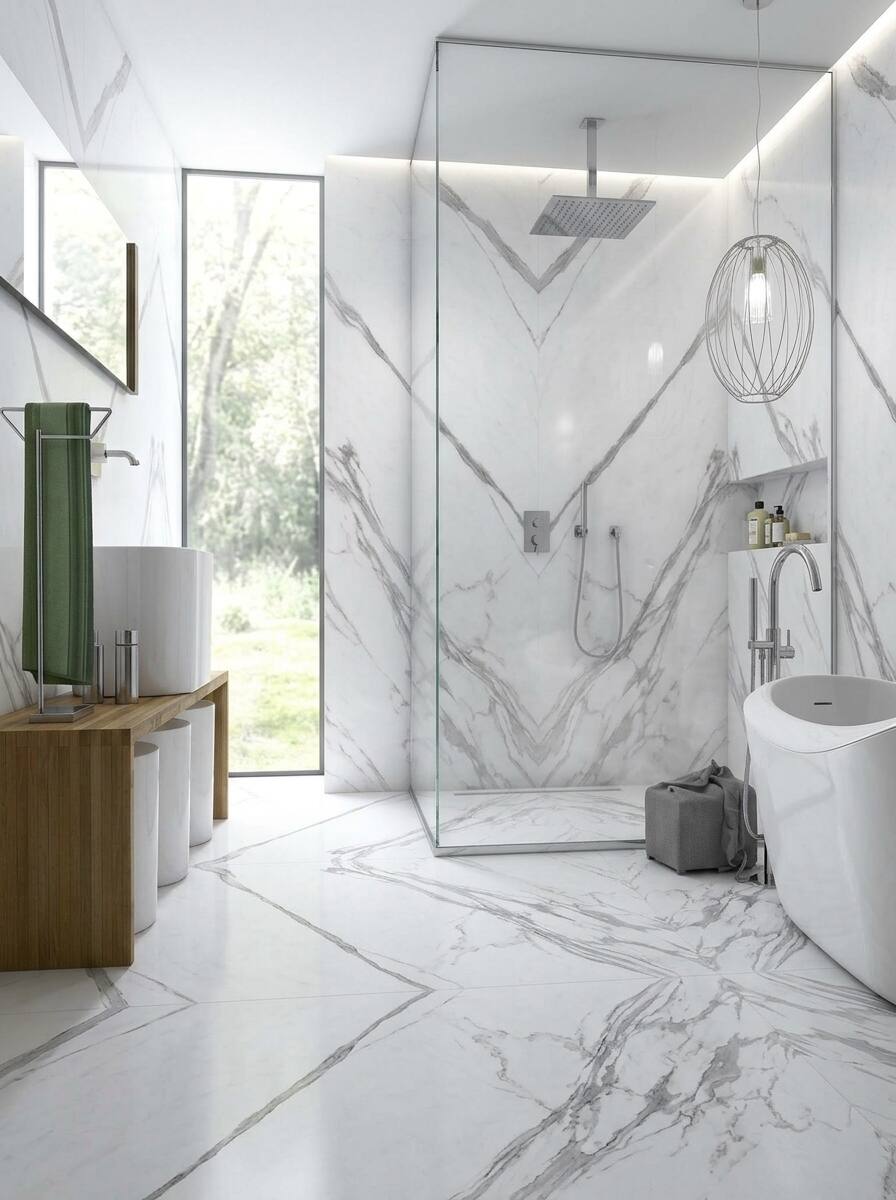
If you want a bathroom that feels clean, quiet, and uncluttered, large-format porcelain is hard to beat. The bigger the tile, the fewer grout lines, creating one calm surface instead of grids. Coordinate the floor and wall tones to further even out the bathroom surfaces, creating a well-proportioned bathroom or ensuite that feels spacious.
This works especially well in bathroom flooring ideas when the rest of the room is already doing something interesting. For instance, with a statement bath, a beautiful mirror, or one textured wall, a simple floor lets them shine by staying understated.
The catch is that the effect depends on the room. In a small bathroom or one with an awkward layout, large-format porcelain tiles can mean a lot of awkward cuts; they don’t suit every part of the room equally well. We will get to shower floors in a moment, where large tiles need particular care.
Bring in Warmth With Natural Stone

Porcelain is great and all, but can we take a moment for the uniqueness and beauty of natural stone? Each tile varies slightly in tone and texture, giving your bathroom the warmth and a lived-in, timeless feel that it deserves.
Limestone tiles are one of the most popular choices for exactly this reason. Honed, tumbled, or brushed finishes in soft creams and warm neutrals suit every period cottage or modern family bathroom. If you are drawn to that look, Dijon Limestone tiles will be your best friend. It has a warm, natural tone that showcases a soft, worn finish rather than a glossy one.
Now the honest bit. Stone isn’t a fit-and-forget floor tile. It needs sealing after fitting and resealing every 2-3 years, depending on how you use the tile. Not doing so can cause staining and marks that are likely permanent.
It is also sensitive to acidic cleaners such as vinegar or limescale removers that can etch limestone. Use cleaners that are made for natural stone tiles. Choose honed finishes over polished ones for the floor; polished stones get slippery when wet. If a spotless, zero-effort floor is what you are after, stone may not be it.
Make a Statement With Checkerboard
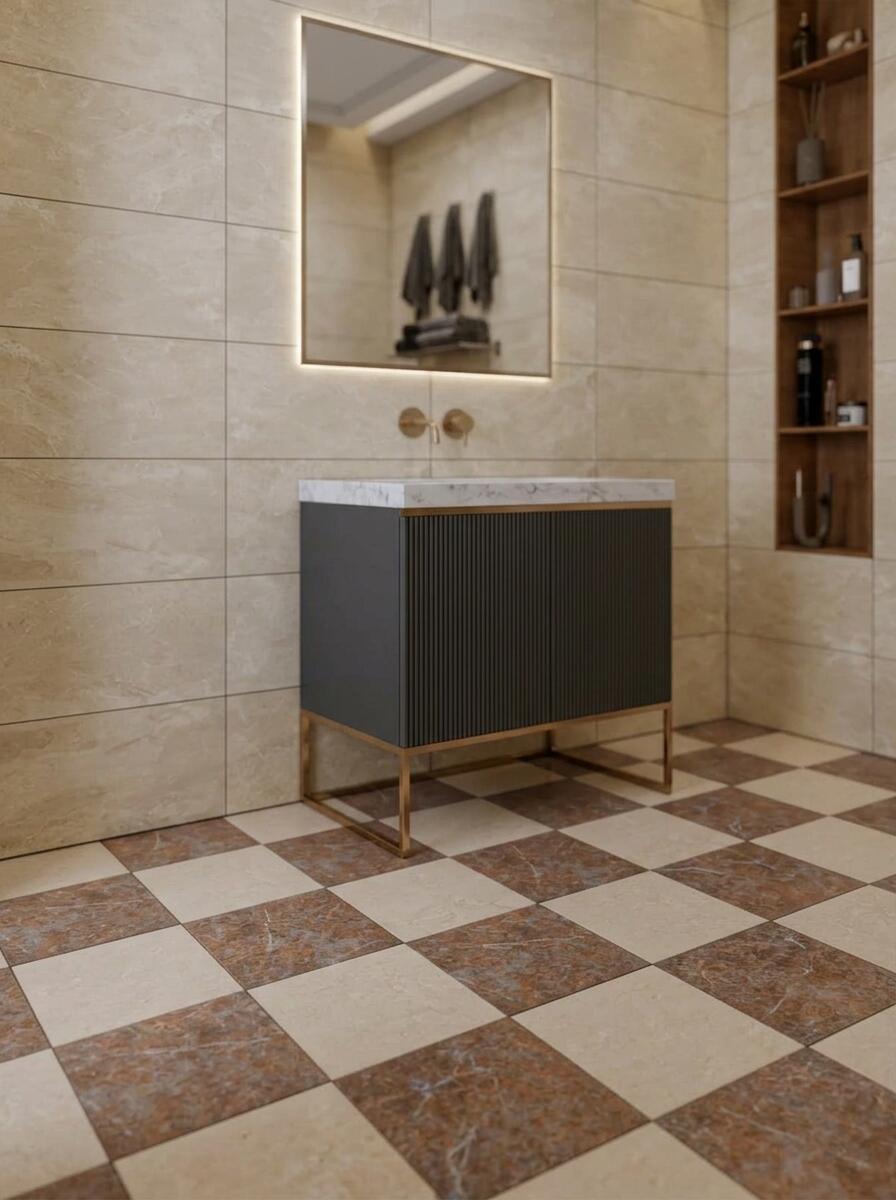
Few floors change a room’s personality as quickly as checkered ones. Classic black-and-white bathroom floors feel traditional and elegant, while softer colours like cream and charcoal feel more relaxed and modern. The same pattern can look playful in one bathroom and calm in another, depending on colour and scale.
The trick is to let the floor be the star and keep everything else plain and simple. Plain walls, simple white sanitaryware and restrained taps and accessories stop the room from feeling busy. If you are weighing up styles, checkerboard floor tiles make it easier to see how much tile size and colour contrast change the effect.
Scale matters more than people expect when it comes to checkerboard bathroom floor design ideas. A high-contrast, large-scale checkerboard makes a bold statement while a smaller or more tonal one is far gentler. The only catch is that a strong pattern is a commitment. It dates a room faster than a plain floor. That is why you should choose it because you love it, not because everyone is getting them on your feed.
Let the Floor Do the Talking in a Smaller Bathroom
Many people play safe in small rooms: choosing pale, plain tiles and hoping for the best. A cloakroom, downstairs loo or compact bathroom is actually the ideal place to be braver. You are only covering a small area, so you can afford patterns and colours that might feel a little overwhelming across the whole house.
Small format tiles, geometric shapes, and decorative wallpapers all work well here. The useful principle is to let only one element carry the visual weight. If the floor is bold, keep the walls, fittings and sanitaryware simple. If the walls are busy, the floor should take a back seat. Two competing patterns in a tiny room feel chaotic very quickly.
Bold is not always better, though. A very dark or highly patterned floor can make a low-lit and windowless room feel smaller. So, consider how much natural light you have before you commit.
What to Consider Around a Walk-In Shower
A walk-in shower changes the rules; part of the room is wet every day, while the rest is occasionally splashed. Treat it as a separate zone with its own requirements. Choose slip-resistant bathroom floor tiles for families where safety matters the most.
Slip Resistance
Look for floor-rated tiles for wet, barefoot areas. Check the manufacturer’s slip-resistance information for the specific tile, rather than assuming any tile will do. A matt or textured surface generally offers more grip than smooth and glossy ones.
Tile Size and Drainage
This is the catch large-format tile fans often miss. A shower floor has to slope towards the drain, but tiles won’t bend. Large-format porcelain tiles for bathrooms work well with a linear drain and a single-direction slope, but a central drain with falls in several directions usually calls for smaller tiles or mosaics that allow you to follow the curve. Ask your installer which drain and fall are planned before you order any bathroom floor types.
Grout and Maintenance
In small bathroom flooring ideas, Smaller tiles mean more grout, and more grout means more cleaning. A good sealant and regular ventilation keep mould at bay, and a squeegee after showering saves a surprising amount of scrubbing.
Waterproofing
Everything under the tiles matters as much as the tiles themselves. A properly tanked floor and walls stop water from reaching your home’s structure.
You can carry the main bathroom floor into the shower area for a seamless look, but only if the tile suits wet use. Otherwise, switch to a more suitable tile in the shower and match the colour so it still looks intentional.
Floors to Think Twice About
Some bathroom floor options, undoubtedly, look lovely; however, they struggle in a bathroom. You must know them before you fall in love with one.
- Solid or Engineered Wood: It can swell, warp, and stain when regularly exposed to moisture.
- Laminate: It is fine until water gets into the joints. Then the edges will swell and lift.
- Carpet: It holds damp and is hard to keep hygienic in wet rooms.
- High-Gloss Polished Tiles: They look glamorous, but can be highly slippery when wet. This matters even more if you have children or older adults in the house.
If you are planning underfloor heating for a lovely luxury on a cold morning, check that your chosen floor and adhesive are compatible before you buy floor tiles. Porcelain and stone flooring both conduct heat well and are the best bathroom flooring for underfloor heating, which is one reason they are so popular.
How to Choose a Floor You’ll Still Love
Rather than crowning one bathroom floor tile a winner, match the floor to how your bathroom will work.
- Want warmth and natural character in your home? Opt for natural stone or warm neutral tones in porcelain.
- Planning a focal point? Try the classic checkerboard tile in a stackable or diagonal pattern.
- Prefer something that screams quiet luxury? Large format porcelain tiles are a safer choice.
- Designing a cloakroom or downstairs loo? Take risks with bold, moody patterns and colours.
- Planning a walk-in shower? Put slip resistance, drainage, and upkeep first, and then choose your look second.
It always helps to see materials in person while exploring bathroom flooring ideas, under real light, as a tile can look quite different on the website and under your own lighting with your own fittings. That is why we recommend ordering samples or visiting a showroom. Porcelain tile suppliers such as Royale Stones have showrooms where you can compare tiles side by side.
The best bathroom floor tiles aren’t just the most fashionable; they are the ones that suit your home, handle how your household actually uses the room, and make you happy every morning when you see them on your bathroom floor.
This is a collaborative post.