Why Every Traveller Should Try a Ghost Tour at Least Once
If you are an avid tourist, there’s a good chance you are always willing to try something new and exciting while exploring the world. No one wants to have the same experience time and time again; therefore, it’s best to make the most out of each trip by discovering the hidden treasures within every stop you make.
Even if you have vacationed in a city such as New Orleans or Boston in the past and feel like you’ve seen every important landmark or historic location, there may be one experience you haven’t tried yet, and that’s going on a haunted ghost tour.
It doesn’t matter if you are a horror fanatic or a sceptic; these unique tours offer a little something for everyone to enjoy. Many of them not only focus on spooky ghost tales and local urban legends, but also on the history behind locations you visit along the way.
So, whether you love a good scare or you enjoy learning those lesser-known historic facts about popular U.S. cities, you should consider taking a ghost tour while visiting these and other towns throughout America.
Charleston, South Carolina

The Haunted Old Exchange and Provost Dungeon
The City of Charleston, SC, has a dark history filled with tales of pirates, prohibition, and casualties of war.
Because it was a port city, there were many pirates who frequented the area centuries ago, including the notorious Blackbeard.
Several years later, South Carolina became one of the first states to enact Prohibition laws in 1914, which led to many citizens rebelling against the new laws, creating mayhem throughout the town.
Charleston also played a crucial role during the Civil War as a strategic location that was coveted by both sides, leading to many tragic deaths occurring on the bloody battlefields.
With so much death, destruction, and chaos taking place in one town, it is no surprise that Charleston is believed to be haunted by countless spirits. Here are just a few haunted historic locations you may visit and learn more about as you take a ghost tour through the Holy City.
The Blind Tiger Pub
As prohibition laws swept through the nation in the late 1800s, those who still wished to drink and gamble were forced to satisfy their addictions in hiding. The term “Blind Tiger” was coined at the time to describe establishments that still allowed illicit drinking and gambling despite the law of the land. The first Blind Tiger establishment in South Carolina opened in 1893 as a rebellious response to the “Dispensary laws” mandated by Governor Ben “Pitchfork” Tillman.
According to tales passed down over the years, Broad Street in Charleston was home to several of these establishments. So, to honor the history of that era, the Blind Tiger Pub opened its doors in 1992. But it seems that alcohol isn’t the only type of “spirit” that can be found inside this historic establishment.
While the pub has only been around for a few decades, it sits atop an underground tunnel system that is accessible through a door at the back of the building. These tunnels were heavily used during prohibition as a way to escape from the law.
The Ghost of the Blind Tiger Pub
It’s been said that the Blind Tiger Pub is haunted by the ghost of a woman named Helen. According to the lore, many years ago, Helen jumped off the roof of a nearby building onto the street below. A good Samaritan saw her and dragged her into the pub They tried to revive her, but it was too late, and Helen died inside the same building that is used today.
Staff members and patrons believe the pub is haunted by Helen’s ghost. Employees have mentioned glasses falling off the shelves and seeing mugs fly across the room before crashing into customers. They’ve also heard cries for help from below the floorboards, but after checking the tunnels that run underneath the building, it appeared that no one was there.
F.W. Wagener Building
Also known as the Wagener-Ohlandt Building, the F.W. Wagener Building, located on East Bay Street, is a historic location with a dark and haunting backstory. This Victorian-style warehouse was built in 1880 by a German agricultural broker, F.W. Wagener. It was originally used as a storage facility for cotton and phosphate wares. Over the years, the building was also used as a grocery store, brewery, fine dining restaurant, and a wedding venue. However, if you ask the locals in Charleston about the history of the building, you will get an answer that is not very typical of an old warehouse or storage building.
The Ghost of George Poirier
There are several haunting tales associated with the Wagener Building, but the most popular is the story of George Poirier. Following the end of the Civil War, the sales of cotton and fertiliser in the South suffered from a swift decline. The Poirier family had made a fortune in these industries for generations; however, George lost everything after a weevil infestation killed all of his crops.
George found that he was unable to continue providing the same lavish lifestyle to his family that they had grown accustomed to. Because of this, he became very distraught and committed suicide inside one of the office spaces in the attic of the Wagener building. The day after he died, a newsboy spotted his body hanging in the window and alerted the town to his death.
Today, it is believed that the ghost of George Poirier haunts the third floor of the F.W. Wagener Building. Some have mentioned seeing the shadow of him hanging in the office where he took his life. Others have also reported feeling an intense drop in temperature in some spots, fearing that his ghost is nearby.
The Circular Congregational Church Graveyard
The Circular Congregational Church Graveyard is the oldest and spookiest cemetery in Charleston. The earliest tombstone at this location dates as far back as 1695. Over the years, it endured a few natural disasters and was the centre of several battles during wartime. Yet it remains filled with more than 700 buried corpses today. However, it was only designed to hold 500.
There are several ghosts said to haunt the graveyard; some say it is because of the tragic way they died, while others believe it is because so many of the dead were forced to share a grave.
Some of the ghosts you may encounter while visiting the graveyard are simply mischievous, while others are extremely malevolent. Visitors have reported seeing mysterious orbs and shadowy figures in photos they have taken. They’ve also heard disembodied voices whispering all around them.
But one of the creepiest encounters at the Circular Congregational Church Graveyard was when a former groundskeeper by the name of Danny Loder was tormented by several menacing spirits. As the story goes, the spirits encouraged Danny to commit dangerous and unspeakable acts. His encounters with these dark entities would often leave Danny in tears, stricken with the fear of what might happen if he didn’t follow their orders. Many believe his constant struggle with the ghosts eventually drove him mad.
The Pirate House
This double tenement residence, known as The Pirate House, was built for the Huguenot merchant Alexander Peronneau and later used as a place where pirates would visit to barter for goods with locals.
This historic 18th-century home is believed to be haunted by ghosts of dead pirates who were a part of Blackbeard’s crew. As the legend goes, the pirates were hanged during the trials following Blackbeard’s siege of the town. Now they haunt the Pirate House seeking vengeance for their horrific death.
Some say that the house was used during the pre-Revolutionary War era as a place for pirates to hide out; others say there is a secret tunnel underneath that the pirates would use to escape from town to the waterfront. The tunnels were also believed to be used for smuggling stolen goods.
Visitors have reported some strange phenomena at the house over the years. One local who once gave tours of the house said he would often see, hear, and even feel things that weren’t actually there. Other visitors have talked about seeing apparitions of ghosts or hearing haunting screams in the distance while touring the home.
New Orleans, Louisiana
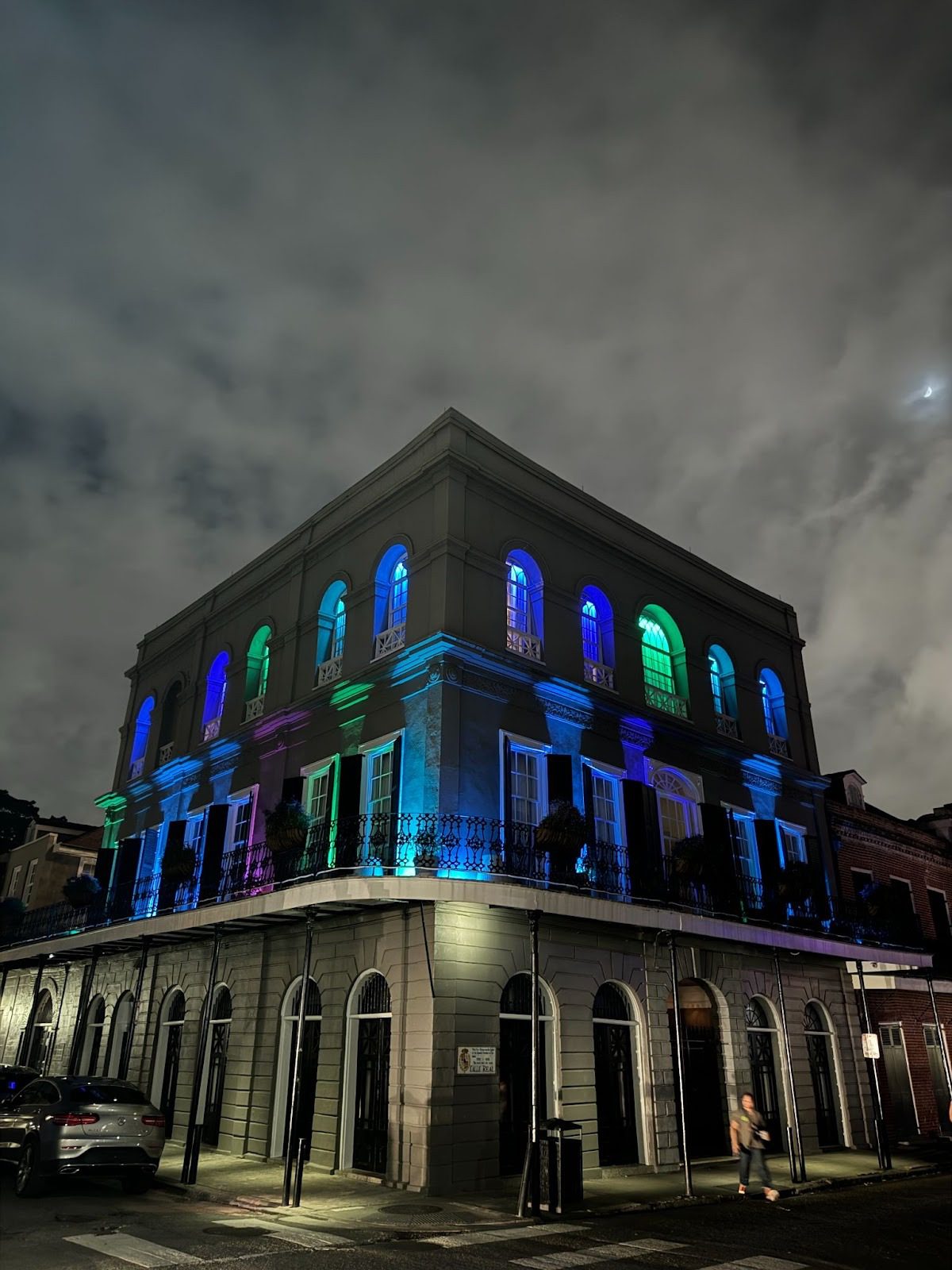
The LaLaurie Mansion in New Orleans
While New Orleans is a well-known tourist destination for those who love a vivid nightlife and festive events such as Mardi Gras, it is no secret that this Louisiana town is also synonymous with all things magical and mysterious.
The city is known for being linked to dark magic, voodoo, witches, and vampires. And with its rich history linked to so many different cultures, you are sure to experience a haunting or two at some of NOLA’s historic landmarks while taking a ghost tour throughout the Big Easy. Here are just a few of the places you may visit along the way.
Beauregard-Keyes House
Located in the infamous French Quarter of New Orleans is the enchanting Beauregard-Keyes House. Although this historic 18th-century home is a beautiful reflection of the past, this property is known to give visitors a creepy and unsettling feeling as soon as they step inside.
Several people have called the Beauregard-Keyes house their home over the years, and even before the house was built, the land it sits on was used for an armoury until it was transferred to a group of French Ursuline nuns.
The Madness of Paul Morphy
The nuns stayed at the location until it was purchased by Joseph Le Carpentier in 1825. He had plans to make the house his dream home, but unfortunately, it became a place of nightmares instead. One of the first strange events to occur there happened when Joseph’s grandson, Paul Morphy, moved into the home. Paul was known by many for being a brilliant chess player, but those in the community knew him for his episodes of madness.
One night, Paul shocked his neighbours when he ran out of the house, naked, wielding an ax, and screaming that demons were after him. There are several who claimed that the sinister energy from the house was what drove him to his madness, and he was never the same after that.
Ghosts of the Confederacy
The house had several more owners after that, including the Merle family, who planted a large flower garden, and a grocer who rented out the house to General Pierre Toutant Gustave Beauregard of the Confederate Army. While the house wasn’t near any epic battles, several people have reported seeing the ghosts of Confederate soldiers inside, appearing bloody from the war. Some have even claimed to see the ghost of General Beauregard himself.
The Sicilian Mafia Murders
Years later, the home was sold to the Giacona family, who were involved with the Sicilian Mafia. Their lavish lifestyle attracted the attention of other mob bosses in the area, who demanded dues from the family matriarch, Pietro Giacona. When Pietro invited four of the bosses to dinner, he and his son committed a triple murder in the dining room while injuring the fourth man in the dining room. Their ghosts have been known to haunt the house as well, mainly because of the tragic nature of their death.
The LaLaurie Mansion
Madame Delphine LaLaurie is one of the most talked-about women in New Orleans history. She was an affluent socialite during the 1800s who moved into the Neoclassical home in the French Quarter after marrying her third husband, Dr Leonard LaLaurie.
The madame was well-liked within her social circles and would host lavish parties that members of the elite class would regularly attend. But after a fire broke out in the mansion on April 10th, 1834, Madame LaLaurie’s reputation took a devastating turn.
As firefighters entered to assess the damage, they found the bodies of seven slaves who were trapped inside, chained to the walls. Their bodies were horrifically mutilated due to the ongoing abuse and torture at the hands of Madame LaLaurie.
Madame LaLaurie Flees New Orleans
The news quickly spread throughout the community, infuriating her neighbours. They raided her home and demolished what was left of the fire-damaged mansion. Delphine and her husband quickly fled New Orleans, arriving in Lake Pontchartrain and later in Paris.
Madame LaLaurie never stood trial for her crimes; she died in Paris a few years later in 1849. But according to local lore, her body was returned to New Orleans and was buried in St. Louis Cemetery No. 1.
The LaLaurie Mansion is Rebuilt
In 1938, a new private residence was built where the LaLaurie Mansion once stood. While it was intended for use as a residential home, it was later used as a school and an apartment complex. Eventually, it returned to its original status as a private residence and was even owned by actor Nicolas Cage in 2006 until he lost it to foreclosure.
There have been many tales of hauntings from the former site of the LaLaurie mansion over the years. People have heard screams coming from the home, seen flashing lights in the windows, and smelled the fragrance of Madame Delphine’s favourite perfume in the air.
Some have reported seeing apparitions of the former slaves who were tortured in the home, as well as the ghost of a small child named Lia who died on the property. According to the story, a neighbour saw Madame LaLaurie chasing the child while holding a whip. She chased her to the top of the house, where Lia fell from a great height and was later buried in the yard.
St. Louis Cemetery No. 1
St. Louis Cemetery No. 1 is one of the most iconic landmarks in New Orleans and one of its most haunted locations. The burial ground was established in 1789, and it is well-known because of its unique above-ground tombs as well as the many ghost stories associated with it.
In the late 1700s, the St. Peter Cemetery in town became overcrowded and was deemed unsanitary, posing a high risk of disease outbreaks. The Spanish colonial government established the St. Louis Cemetery No. 1 outside the city limits of New Orleans. It was named after King Louis IX of France, and the idea to feature above-ground tombs was influenced by both European and Mediterranean burial practices.
Several historic events helped shape the development of the cemetery we know today. It has survived many natural disasters, including floods and hurricanes, and also endured damage during the battles of the Civil War.
The Grave of Marie Laveau
One of the most notable graves at the cemetery belongs to the Voodoo Queen Marie Laveau. Marie was born in 1801 and was known throughout New Orleans for her spiritual advice and healing powers. Her tomb is the one in the cemetery that is most frequently visited and is often marked with ‘XXX’ by those who are seeking her guidance and favor.
Although there is no marked grave for her, it is widely suspected that Madame Delphine LaLaurie is also buried in the St. Louis Cemetery No. 1 and that her ghost haunts the area along with many other spirits.
Because of its high levels of paranormal activity, the cemetery attracts ghost hunters from all over the world. Many visitors have reported seeing apparitions of ghosts, including a Confederate soldier and the ghost of Marie Laveau, who is often spotted near her tomb.
Arnaud’s Restaurant
Arnaud’s Restaurant in the French Quarter is one of the finest places in town to enjoy authentic Creole cuisine, and it’s also one of the best places to experience a true ghost encounter while visiting NOLA.
The restaurant opened its doors in 1918 and was originally owned by Arnaud Cazenave, a French wine merchant who earned the moniker of Count Arnaud because of his flamboyant personality. After he died, the restaurant passed on to his daughter, Germaine Cazenave Wells, who managed it until it was sold to its current owners, the Casbarian family.
The Spirits of Arnaud and Germaine
Even though the Count and his daughter have been dead for many years, it seems that their spirits have decided to stick around the establishment. Staff members and patrons have mentioned seeing a gentleman dressed in a tuxedo in the dining room who resembles Arnaud. He appears to be supervising the area and making sure everything is running smoothly, much like he did while he was still alive.
The ghost of Arnaud’s daughter, Germaine, has also been seen at the restaurant. People have claimed to see the apparition of a woman in a hat leaving the women’s restroom. She will cross the hallway and disappear into the wall where the old staircase was once located. She has also been seen inside the restaurant’s Mardi Gras museum, admiring the ball gowns that she wore during the festive event years ago.
Savannah, Georgia

The 17Hundred90 Inn
Savannah, GA, is a beautiful Southern town near the coast featuring peaceful parks, fine dining options, and plenty of shopping opportunities. It’s one of the best places for a weekend getaway, but there are plenty of haunting secrets and ghost stories that make it an ideal location for some of the best ghost tours Georgia has to offer.
Tragic deaths took a toll on the people of Savannah, especially during the early 19th century. Yellow fever swept through communities, claiming the lives of hundreds of victims. Now, locals believe many of the ghosts who haunt the area are the spirits of those whose lives ended far too soon because of the deadly epidemic.
The Hostess City has an excellent mix of haunted yet historic battlefields, cemeteries, hotels, and homes built centuries ago that are known for hosting dark entities and spooky spirits. Here are just a few examples of the locations you may visit while taking a ghost tour through town.
The 17 Hundred 90 Inn and Restaurant
When the City of Savannah was formed in 1790, it was a small village with just a few hundred buildings and sandy streets. The 17 Hundred 90 Inn and Restaurant was originally built as three separate buildings between 1821 and 1823 and is known as one of the oldest restaurants and inns in town that is still in operation.
With it being around for centuries, the establishment has endured many changes and tragedies over time. And anywhere tragic deaths occur, you can be sure there is paranormal activity in the same space for years to follow.
The Ghosts of 17 Hundred 90
According to local lore, there are at least three ghosts that haunt the popular restaurant and inn. A ghost named Anna is most frequently seen, and her story is a tragic tale of love and loss. Anna was involved in an arranged marriage when she fell in love with a soldier in the early 1800s. As the story goes, she threw herself out of the window on the third floor and crashed onto the brick courtyard as her beloved headed down the Savannah River on a ship. Another version of her story says she was pushed out of the window by her jealous husband.
Some of the guests have mentioned feeling someone nudge them or having their blankets swiftly removed from their beds at night. Others have noticed their belongings missing, such as clothing or jewellery, while staying in guest room 204, the room that Anna apparently jumped from.
The spirit of a young boy named Thaddeus can also be seen around the inn. Several guests have seen the boy in the restaurant and tavern as well. He has been known to leave shiny pennies on the tables and the bar. The good news is he’s a friendly spirit, known to have a warm and pleasant presence.
But there is another unnamed ghost at 17 Hundred 90 who isn’t as pleasant as Thaddeus. This spirit has been known to stay in the kitchen, tossing around pots and pans or throwing spice jars at cooks and other kitchen staff.
The Owens-Thomas House
The Owens-Thomas House is a historic house museum in Savannah. It was originally built in 1819 by British architect William Jay. The house is one of America’s finest Regency houses, featuring art pieces and furnishings from the early 1800s.
There is an abundance of history connected to the old house that was originally the home for cotton merchant and banker Richard Richardson. After losing most of his fortune, the property was sold to Mrs Mary Maxwell, who used it as a lodging house. One of her most distinguished guests at the time was the Revolutionary War hero Marquis de Lafayette, who gave an inspiring speech to the people of Savannah one evening from the south cast-iron balcony.
In 1830, the house was sold to George Welshman Owens, a local attorney and politician. He was the mayor of Savannah for a time before being elected to the United States Congress in 1835. Upon his death, the property was inherited by his granddaughter Margaret Thomas, who bequeathed the house to the Telfair Academy of Arts and Sciences in 1951.
Today, the Owens-Thomas House is run as a museum by the National Historic Landmark, offering tourists and locals a peek into what life was like living in Savannah in the late 1700s and early 1800s.
The Urban Slave Quarters
On the same property is the Urban Slave Quarters, one of the oldest structures of its kind that is still standing. Inside this two-hundred-year-old building are artefacts and other items that were used by slaves. The ceiling of the quarters is painted a shade of blue known as “Haint Blue.”
According to the story, the slaves painted the ceiling this specific colour to keep evil spirits away and to keep other ghosts who fail to move on from entering their world. The slaves referred to those spirits as “Haints”.
The shade of blue is similar to the colour of water because it is believed that haints are unable to cross over water, which helped to ensure that those restless spirits would never enter any room or space that resembled the colour of water.
Many tragedies occurred in and around the Owens-Thomas House over the years. There was a fire in 1820, the adverse effects of the Civil War, and the outbreaks of yellow fever, all of which were responsible for the damage, destruction, and tragic deaths of that era. Because of this, the Owens-Thomas house is haunted by many dark secrets and dark spirits.
According to locals, staff members, and visitors, lost souls of the dead roam through the halls at night. One spirit who is most often spotted is a man who has dark black hair and is dressed in clothing from the 1830s. He is often seen in front of the parlour room, keeping a watchful eye on all who enter.
Several people have reported seeing items moved and even tossed around from one guest room to the next. Chairs are often moved in the dining room by an unknown presence, and the staff members have mentioned hearing phantom footsteps behind them, as well as unexplained noises coming from various rooms.
Colonial Park Cemetery
The Colonial Park Cemetery was established in 1750 when Savannah was the capital of then British-controlled Georgia. Over time, the cemetery expanded until it reached six acres in 1789. There were many tragedies that occurred in the area, which caused the constant need for more burial space.
Originally, the cemetery was used for the Christ Church Parish to only bury members of their congregation, but after the expansion, it was open to all residents of Savannah, becoming the main public cemetery for the area.
When the yellow fever outbreak occurred in 1820, nearly 700 people who contracted the illness were buried in the cemetery, eventually causing it to be at full capacity by 1853.
During the Civil War, General William T. Sherman captured the city of Atlanta in hopes of terrifying all of Georgia into leaving the Confederacy. He and his 60,000 troops travelled throughout the state, leaving fear and destruction behind them everywhere they went, except for Savannah, which General Sherman spared. The majority of the city was untouched except for the Colonial Park Cemetery.
It’s been said that the Union soldiers sent a message as they altered the sacred burial ground. The cemetery became their temporary home as many of them found shelter inside the burial vaults. And according to the story, they moved bodies and changed the dates on many of the headstones as sick and twisted jokes.
Many believe that their mistreatment of the dead left the spirits of those who rested at the cemetery angry, and now they haunt the grounds each night. It is considered by many paranormal experts to be a hotspot for ghostly activity. People have reported seeing dark apparitions lurking along the gravestones. Strange noises can be heard from inside the cemetery, and an eerie green mist has also been seen floating around at times.
Juliette Gordon Low House
The Juliette Gordon Low House in Savannah was built in 1821 for her father, Judge William Washington Gordon. The Gordons were the most prominent family in Savannah, with several of them taking on leadership roles in politics, business, and society.
Their home was a hub of culture and intellect, as the family’s values focused on education, service, and social progress. These values helped to shape young Juliette’s life and inspire her well into adulthood. She grew up to be the founder of the worldwide movement that has empowered girls all across the globe for more than 100 years, known as the Girl Scouts of the USA.
This house was Juliette’s birthplace and where she grew up in the late 1800s, during a time when career opportunities for women were limited. But despite the constraints of society, Juliette was encouraged by her family to be creative, independent, and always help others whenever she had the chance to do so.
Juliette travelled to England and met with the founder of the Boy Scouts, Robert Baden-Powell. After spending time with him, talking about his program, she returned to Savannah, and on March 12th, 1912, she held a meeting in her family parlour with 18 girls who made up the very first Girl Scout troop.
Juliette Gordon Low passed away in 1927. She was buried in her Girl Scout uniform as a dedication to the legacy she left behind. Her family home was converted into a museum showcasing her life and the history of the Girl Scouts program. According to local lore, many believe that Juliette’s spirit, and some of the spirits of her family, have continued to reside in their own home long after they have passed away.
Juliette’s spirit will make her presence known during Girl Scout events and activities. Anytime a troop visits the museum, she is likely to appear, wearing her old uniform along with her pins and badges. Visitors have reported feeling a warm and inviting presence during their tours of the home, and some have even mentioned feeling a burst of inspiration and confidence while they are there.
The ghost of Juliette’s mother, Eleanor, has also shown up in the family parlour, where the very first Girl Scout meeting took place. She manifests a loving, nurturing presence that is often felt whenever the young guests need guidance or comfort. Unlike many other haunted locations in Savannah, the Juliette Gordon Low House is nurturing to friendly spirits who are happy to invite their visitors in.
Boston, Massachusetts
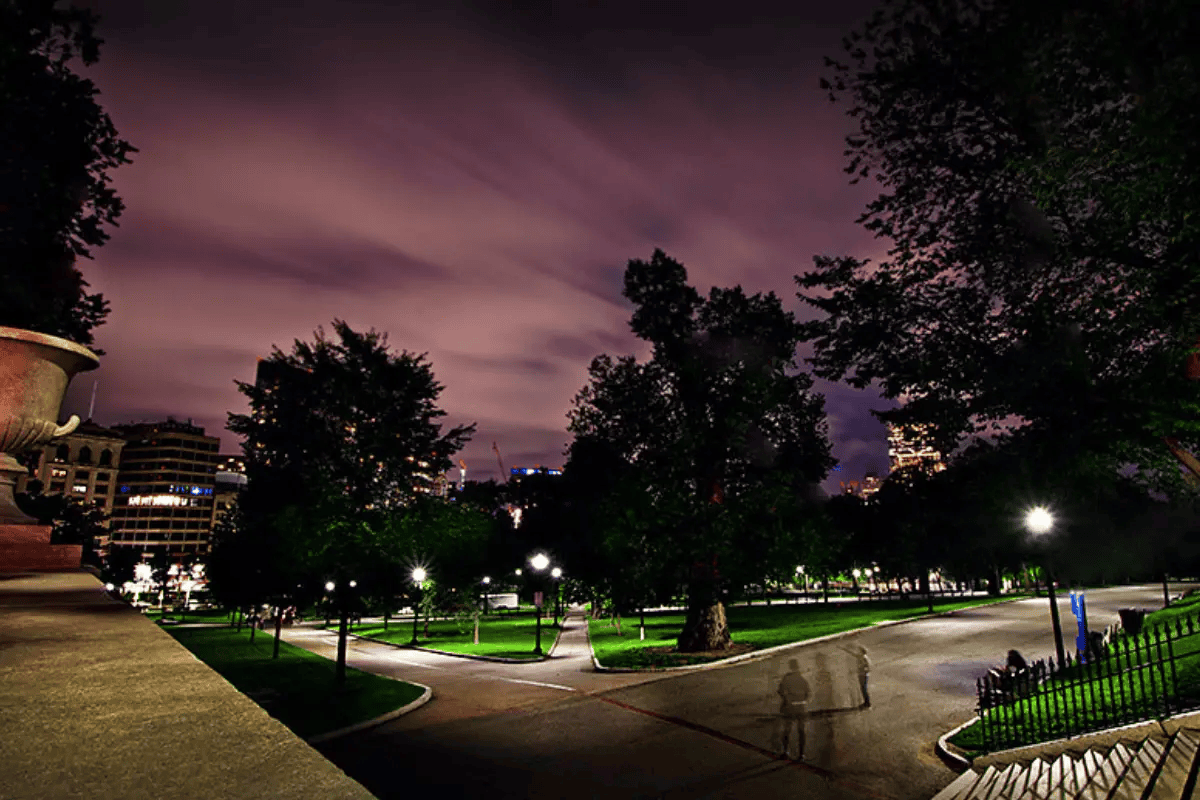
The Boston Common
Even in this modern age, it feels like you’re stepping into the past when you visit Boston. There are so many iconic historic landmarks to visit, and many of them have a much darker history than we were taught in school. This is where the spirits of old abide and wish to contact anyone willing to reach beyond the veil.
The City of Boston, MA, played a pivotal role in our nation’s history when a riot in the streets known as the Boston Massacre jump-started America’s independence. But while the city was inspiring some of the biggest uprisings in history, Boston also endured many tragic deaths that have left a shadow over the city forever.
If you take a ghost tour through Boston, you are sure to hear just as much about the city’s history as you will hear haunting ghost tales. Here are some more details about some of the locations you may stop at along the way.
Boston Athenaeum
The Boston Athenaeum was founded in 1807 by the Anthology Society of Boston. They wanted to create a reading room and were inspired by the style of the Athenaeum in Liverpool, England. Over the years, the society has added a library, an art gallery, and a room to hold collections of coins and odd curiosities, including a book that’s made from human skin.
The Athenaeum is said to be one of the oldest libraries in the country, as well as one that has seen the most paranormal activity. The very first spiritual encounter occurred during the mid-1800s. The author Nathaniel Hawthorne was visiting and claimed that he saw the spirit of the late Reverend Harris in the reading.
While he was alive, Reverend Harris would often visit the Athenaeum to relax and read a copy of the Boston Post. While he and the author didn’t know each other personally, Hawthorne likely saw him there from time to time. One day, a friend told Hawthorn about the reverend passing away, and it was later that same day that he saw him in the reading room.
There have also been several recent ghost sightings at this location. Some visitors have mentioned seeing a man dressed in black waiting on an elevator. And many others have reported seeing the ghost of Reverend Harris wandering around the building.
Old Granary Burial Ground
The Old Granary Burial Ground was once a part of the Boston Common, which is the oldest public park in the country. It was then an area used for livestock until 1660, when it was converted into a burial ground. The cemetery was established to replace the King’s Chapel cemetery after it ran out of room. It was officially named the Old Granary Burial Ground in 1737, and people from the community were buried there for around 200 years until it filled up in 1880.
Since that time, the cemetery has gone through several renovations to protect it from issues such as unwanted trespassing and grave robbing. Eventually, it became a historical park in 1830, where visitors can stop by and pay their respects to their ancestors and other locals who have been gone for centuries.
Because it is such an old cemetery, there are a few notable people from Boston’s history buried there, including one of our founding fathers, John Hancock, and the parents of Benjamin Franklin. Along with those historic figures, the graveyard is also believed to be home to several haunting spirits.
Many people who have visited the Old Granary Burial Ground over the years have reported having an unsettling feeling while visiting the location at night. Some of them have mentioned feeling as if someone was watching them, even when no one was around.
The Omni Parker House Hotel
If you’ve ever wanted to stay overnight at a haunted hotel, the best place in Boston for spooky accommodations is the Omni Parker House Hotel. This historic hotel is around 170 years old and is well-known in the area for being a hot spot for ghostly encounters.
In a 1922 interview for the Boston Globe, a bellman named John Brehm shared a story about his encounter with the ghost of Harvey Parker. Harvey was the owner of the restaurant and hotel. Everyone who knew him described him as a perfectionist who was a hands-on host for all of his guests, from the ordinary to VIPs. He loved the establishment and took great pride in managing it, so much so that it makes sense for him to never want to leave it behind, even in death.
He said people used to say Harvey’s ghost roamed the halls on the tenth-floor annexe. One encounter from the 1950s was from an elderly woman who said she saw the ghost outside her guest room 1078. She described it as a misty apparition at first, then it turned to face her. She described him as a heavy-set older man with a black moustache. He faded away just a few seconds later. The woman went downstairs and talked to a security guard, who went upstairs with her to investigate. After searching the area, they didn’t find anyone who met the description.
In a guest room on the tenth floor, some staff members have claimed to hear the sound of an old rocking chair, and guests have reported the same noise keeping them awake at night. However, there are no rocking chairs in the hotel.
Other guests have reported ghostly encounters at the hotel. Security is often called to search Room 1040 due to strange noises. But they always come up empty-handed. One resident who lived in Room 303 for many years was known for drinking whiskey and smoking cigars with a strong odour. Years after his death, guests who stay in nearby rooms have complained of smelling whiskey and cigars even after the room has been thoroughly cleaned.
The Lizzie Borden House

The Lizzie Borden House – Copyright Lizzie Borden House
Located about an hour away from Boston is the Lizzie Borden House, the former home of the Borden family, where the infamous murder took place in 1892. This location is ideal for history buffs, true crime lovers, and horror fanatics alike. Visitors have the option of joining a ghost tour of the house or staying overnight in one of the themed guest rooms or suites.
As the story goes, Lizzie Borden was tried and acquitted in August 1892 for murdering her father and stepmother using an axe. No one has been charged with the murders since then; however, there were many people in the Fall River community, both back then and now, convinced that Lizzie committed the horrendous crime.
There are several tours available at the Lizzie Borden House, including a Christmas-themed tour that shares what the holidays were like in the 1800s, a tour of the house that takes you through each room as guides provide insight on the history of the home and the Borden family, and a chilling ghost tour at night where participants are provided with ghost hunting equipment and allowed to investigate the entire house, including the basement that is known to be haunted.
Staff members and guests have mentioned that the third floor is also very haunted. Visitors have spotted ghosts of small children rolling marbles on the floor, moving objects, and playing with coat hangers in the closet. They have also been heard laughing in the middle of the night. People have also heard the sound of phantom footsteps behind them, seen shadowy figures in their rooms, and even seen a creepy ghostly face on one of the basement walls.
Taking a trip to a historical location in the U.S. is a fun and exciting way to discover something new in a town you may have already visited multiple times in the past. And to make your visit even more eventful, booking a ghost tour and learning more about the haunted history of your favourite tourist towns is sure to be an experience you won’t soon forget.
Images Copyright US Ghost Adventures
This is a collaborative post.