How to Heal Post-Acne Marks and Prevent Long-Term Scarring
Most people consider any mark left by a breakout a scar, but they actually aren’t. What distinguishes a temporary discolouration from a permanent change in the structure of your skin determines how you approach treatment – and using the incorrect treatment on the incorrect issue is why many individuals become frustrated in an endless continuum of breakouts that never truly heals.
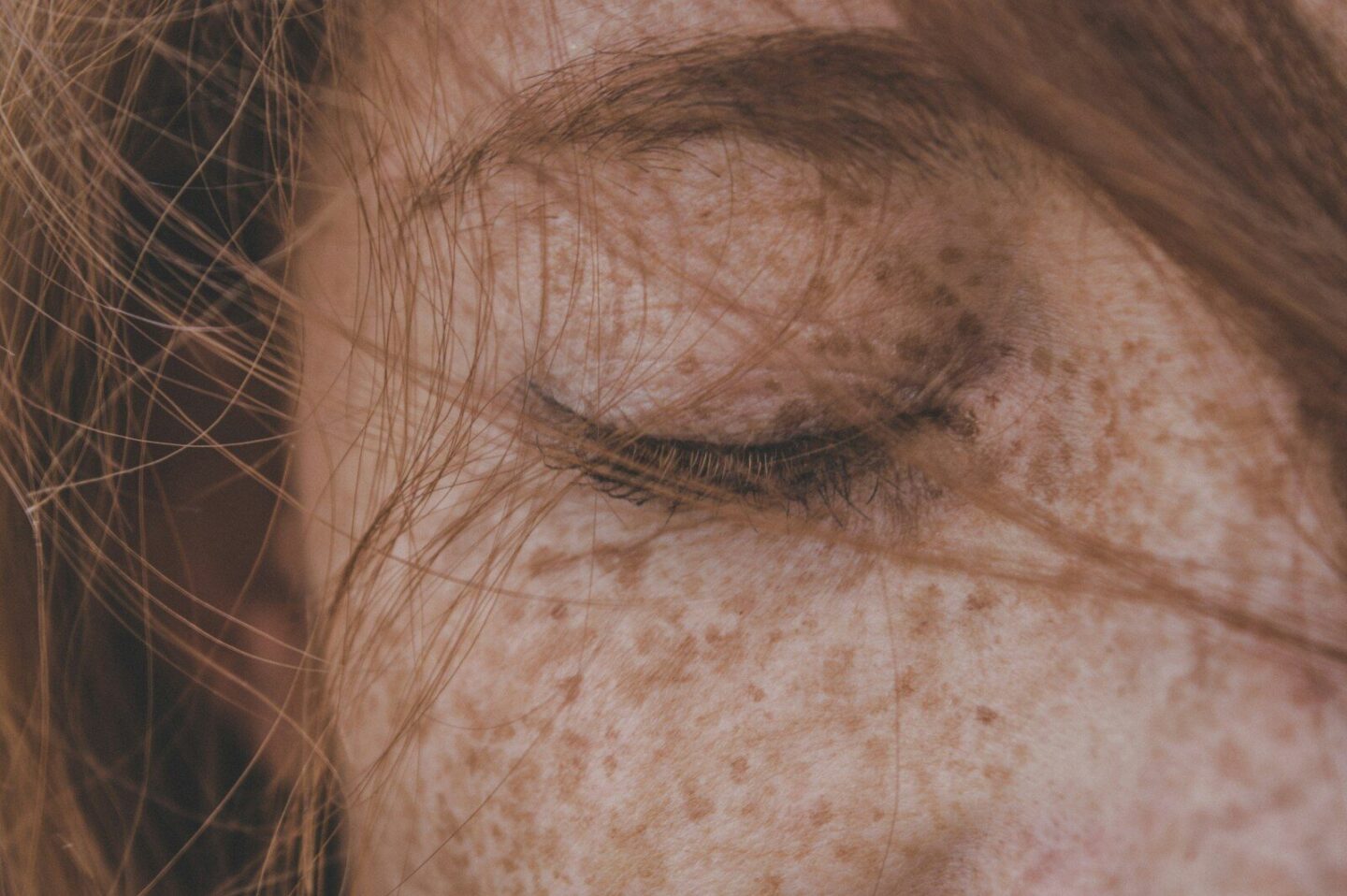
Flat marks, be they red, pink, purple, or brown, are not clinically scars. They are epidermal repercussions of inflammation and may fully disappear with a targeted approach. Real scars – those that cause a change in texture, an indentation or raised skin – damage the dermis structurally. The two cannot be treated with the same routine, the way you wouldn’t use a bandage on an internal wall crack.
PIE versus PIH: two different biological problems
When a pimple goes away, it often leaves one of two types of marks, and each requires a different intervention because they have completely different causes.
Post-Inflammatory Erythema (PIE) shows up as red, pink, or purple flat spots. These are the result of capillary damage close to the surface of the skin. The inflammation from a breakout stresses and dilates the tiny blood vessels underneath, and they don’t immediately return to normal. PIE is a vascular issue. The marks fade as those capillaries heal and contract.
Post-Inflammatory Hyperpigmentation (PIH) appears as tan, brown, or dark flat spots. Here, the problem isn’t blood vessels – it’s melanogenesis, the biological process by which the skin produces melanin. Inflammation triggers melanocytes to overproduce pigment as a kind of protective stress response, and that excess pigment deposits unevenly in the skin. PIH can take anywhere from 3 to 24 months to fully resolve on its own without targeted intervention.
Knowing which type of mark you have changes your ingredient strategy. PIE calls for anti-inflammatory, barrier-supporting, and capillary-strengthening actives. PIH calls for tyrosinase inhibitors – ingredients that interrupt the melanin production pathway before pigment can fully set in the skin. Using a depigmenting agent on PIE, or focusing only on soothing ingredients when PIH is the problem, slows everything down.
Why squeezing guarantees worse outcomes
Let’s be real about this because the compulsion to squeeze a spot is hard to resist.
When a pimple appears, it’s a surface-level event – inflammation contained relatively near the top. When you squeeze a lesion, you’re not just draining the contents upward. A significant portion of the debris, including bacteria, gets pushed laterally and downward, directly into the dermis. The follicle wall ruptures under pressure. What was a contained surface lesion becomes a dermal wound.
The body responds to dermal wounds differently than it responds to surface-level inflammation. Deep tissue damage triggers an aggressive repair process that can deplete collagen in the surrounding area, leaving behind an atrophic depression – a boxcar scar, rolling scar, or icepick scar depending on the depth and nature of the wound. For some skin types, the opposite happens: an overproduction of collagen creates a hypertrophic or keloid scar.
Neither outcome is reversible with topical skincare. That’s the real cost of premature extraction. A breakout that would have resolved with minor discolouration instead becomes structural damage requiring clinical remodelling.
The dual-track principle: suppression and repair at the same time
One of the most common mistakes made in the treatment of post-acne marks is focusing entirely on the marks while not simultaneously working on getting active breakouts under control. It’s a bad model. Every new active breakout has the potential to create new PIE, new PIH, or new structural damage. You’re filling holes in a leaking bucket.
The more correct model is to run active breakout suppression and active barrier repair as two parallel but equally important tracks during this phase. They’re not in competition. If you use the right exfoliating and sebum-clearing ingredients, you can even get away with using some heavier hydrators you might have been shy of before, since the dryness you fear is only occurring due to untreated breakouts.
Salicylic acid, as a lipid-soluble BHA, remains one of the best all-round ingredients for this phase, as its ability to penetrate the pore lining and clear sebum is necessary in getting the conditions that lead to new lesions under control. In the right concentrations and usage patterns, it’s also less damaging to barrier functionality than other, more needlessly exfoliating acids might be.
This is also the phase where seeking effective acne treatment from a professional becomes genuinely valuable – not because topical care stops mattering, but because clinical intervention can calm active inflammation at a deeper level before permanent structural damage has a chance to develop. Alongside that, barrier-repairing ingredients like ceramides and hyaluronic acid are non-negotiable. Inflamed, compromised skin heals more slowly, develops more severe discolouration, and is more susceptible to repeated breakouts. Keeping the stratum corneum intact and well-hydrated creates the environment in which cellular repair can actually run efficiently.
Centella Asiatica as a repair accelerator
Centella Asiatica – often known simply as Cica – crossed over from traditional wound care to mainstream skincare for good reason. As a botanical active, it delivers a fairly targeted, well-understood set of mechanisms to the skin.
At the precise site of epidermal injury, Cica compounds elevate the antioxidant enzyme level, neutralising the free radicals that perpetuate the inflammatory state and obstruct the normal healing process. Simultaneously, these compounds directly boost the synthesis of Type I collagen, the protein responsible for the density and firmness of skin. Cica’s active support of collagen synthesis in the dermis while inflammation is ongoing helps protect against the collagen deficit that would otherwise cause atrophic scarring.
Beyond that, Cica strengthens the skin barrier by reinforcing the lipid matrix and improving hydration retention. For post-breakout skin that’s already stressed and slightly compromised, this is a practical advantage. An intact barrier heals faster, maintains a better environment for collagen synthesis, and doesn’t compound damage by letting irritants in while moisture escapes.
Niacinamide works well with Cica at this point. As a form of Vitamin B3, it also has anti-inflammatory properties that can help mitigate early-stage inflammation. Niacinamide also inhibits the transfer of melanin from melanocytes to skin cells – in other words, it directly interferes with the PIH pathway.
Retinoids should wait until skin conditions stabilise, as so many of them, particularly adapalene and tretinoin, can be even more effective PIH treatments than Cica or niacinamide since they are not only increasing the rate of cellular turnover but directly upregulating collagen production while they’re at it. However, they’re less suitable for the acute phase of post-breakout skin care, as any exfoliant can increase vulnerability, as can any ingredient that can amplify photosensitivity when the skin is in an active state of inflammation.
Sun protection is not optional
UV radiation makes every type of post-acne mark worse. This is biochemically straightforward: already-inflamed, vulnerable skin cells are primed for melanin overproduction, and UV exposure is one of the primary triggers of melanogenesis. What would have been a temporary pink or red mark gets converted into a deeper, longer-lasting brown spot with even modest, repeated sun exposure.
An SPF 30+ broad-spectrum sunscreen applied daily is the single intervention with the highest return in the post-acne healing process. It doesn’t just prevent new damage – it removes one of the main factors that extend healing timelines unnecessarily. Skipping sunscreen while using depigmenting actives is essentially undoing the work in real time.
The protection applies even on overcast days and when you’re primarily indoors with window exposure. UV doesn’t stop penetrating because clouds are visible.
Why over-exfoliation makes things worse
Many people believe that exfoliating more frequently and more aggressively speeds up cell turnover and, therefore, wound healing; in post-acne contexts, this is often false.
Physical scrubs, the kind of exfoliation that involves granules or abrasive texture, cause microtrauma to already compromised, inflamed skin, and effectively extend PIE by damaging capillaries and worsen PIH by inciting melanin production in reaction to stress.
Chemical exfoliants at too high concentrations applied too frequently do the same thing via a different mechanism: by damaging the stratum corneum, compromising the barrier function, and throwing the skin into a state of chronic low-level inflammation.
For post-breakout skin, slower, gentler exfoliation outdoes high-intensity exfoliation in wound-healing by a wide margin; you want to support the skin’s own regenerative efforts, not override them with a flood of chemical exfoliants.
When topicals aren’t enough
Flat marks like PIH and PIE can generally resolve with the right topical routine and adequate sun protection; however, resolution timelines can vary widely by both skin tone and the severity of the mark. The deeper the skin tone, the more likely you are to experience a hyperpigmented PIH mark, and the longer your body takes to naturally resolve it.
But when we talk about scars that have an architecture, like deep boxcar, icepick, and rolling scars – these involve the physical architecture of the dermis. No topical can penetrate deep enough to rebuild that architecture. Some retinoids and collagen-stimulating actives can generate gradual surface-level improvement, but for meaningful change in deep structural scarring, clinical remodelling is required. Targeted professional treatments work by triggering a controlled wound-healing response that rebuilds dermal collagen from within, in ways that surface-applied ingredients simply can’t replicate.
Recognising this threshold matters. Continuing to add topicals to a routine when the skin needs clinical-level collagen remodelling isn’t just ineffective – it delays the treatment that would actually help.
Know your stage, treat accordingly
Post-acne skin healing isn’t one problem – it’s three distinct ones: vascular repair, pigment regulation, and structural remodelling. Each sits at a different depth in the skin and responds to different interventions. Getting results means correctly identifying which stage you’re in and building your approach around that biology rather than around generic “heal your skin” advice that treats all three as interchangeable. The marks left by acne can almost always be addressed, and for most people, more effectively than they expect – but only when the strategy matches the actual mechanism of damage.
This is a collaborative post.