How Do Salt Cells Work and When Do They Need Replacing?
A salt water pool uses a salt cell to produce chlorine and keep the water clean and sanitised. Instead of adding chlorine manually, electrolysis converts the dissolved salt into chlorine as pool water passes through the cell. Over time, the cell can become less effective as its internal components wear down, which may eventually make salt cell replacements necessary. Understanding how the cell works and recognising the warning signs can help maintain consistent water quality and avoid unnecessary problems with the chlorination system.
What is a Salt Cell?
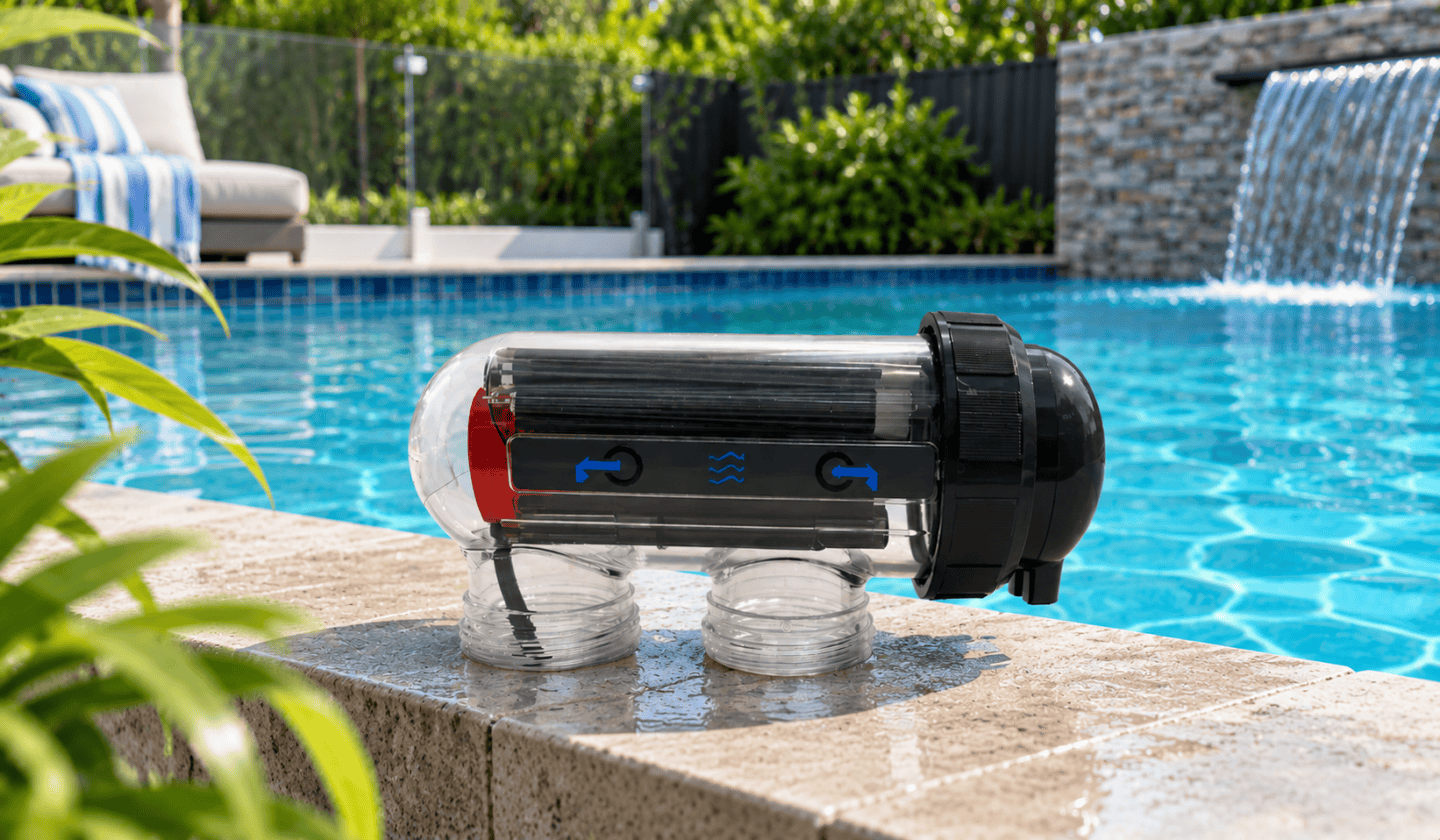
A salt cell is a key component of a saltwater chlorination system. It is usually installed in the pool’s plumbing after the filtration equipment, allowing treated pool water to flow through it before returning to the pool.
Inside the cell are metal plates coated with specialised materials. When an electrical current passes between these plates, electrolysis occurs. This process converts dissolved salt into chlorine, which then sanitises the pool water.
The salt is not consumed in the same way as traditional chlorine. Instead, it remains part of a continuous cycle within the chlorination process, although some salt can be lost when water is splashed out, backwashed or otherwise removed from the pool.
How Does a Salt Cell Work?
The salt cell works through a straightforward process that takes place whenever the chlorinator and pool circulation system are operating.
- Salt Is Dissolved in the Pool Water: A measured amount of salt is added to the pool, where it dissolves into the water. The correct salt concentration depends on the chlorinator being used.
- Water Passes Through the Salt Cell: The pool pump moves filtered water through the plumbing and into the salt cell. The water comes into contact with the electrically charged plates inside the unit.
- Electrolysis Produces Chlorine: An electrical current passes through the water between the cell plates. This causes a chemical reaction that produces chlorine from the dissolved salt.
- The Chlorination Cycle Continues: The newly produced chlorine returns to the pool and helps control bacteria, algae and other contaminants. As chlorine is used, the salt is converted back into compounds that can continue through the cycle.
The amount of chlorine produced depends on factors such as the chlorinator’s output setting, pump operating time, water temperature and overall pool conditions.
Signs That a Salt Cell Needs Replacement
A salt cell has a limited service life and will eventually need to be replaced. Several signs can indicate that it is no longer producing chlorine as effectively as it should.
Reduced Chlorine Production
A noticeable reduction in chlorine production can be one of the first indications of a worn cell. If the chlorinator is operating normally but chlorine output continues to fall, the cell may be approaching the end of its service life.
Consistently Low Chlorine Levels
Consistently low chlorine readings can indicate that the salt cell is not producing enough chlorine to maintain the recommended level. Before replacing the cell, check the salt concentration, water chemistry, pump operation and chlorinator settings, as these factors can also affect chlorine production.
Excessive Calcium Scale on the Cell
Calcium scale can accumulate on the cell plates when the pool’s water chemistry is not properly balanced. Excessive scale can reduce the efficiency of electrolysis and limit chlorine production. Regular cleaning may remove minor deposits, but heavy or recurring scale can damage the cell over time.
Visible Damage to the Cell Plates
Cracks, corrosion, worn coatings or other visible damage inside the cell can affect its ability to generate chlorine. A damaged cell generally requires professional assessment and may need replacement.
Frequent Chlorinator Error Messages
Repeated error codes or warnings can indicate that the chlorinator is having difficulty detecting or operating the cell. While some errors may be caused by electrical or water-flow issues, recurring warnings should not be ignored.
How Long Does a Salt Cell Usually Last?
The service life of a salt cell varies depending on the brand, model, operating hours, water chemistry and maintenance routine. Many cells can operate for several years under suitable conditions, but heavy use and poor water balance can shorten their lifespan.
Regularly checking chlorine levels, keeping water chemistry balanced and removing calcium deposits when appropriate can help the cell operate effectively for longer.
How to Choose the Right Salt Cell for Your Pool?
Choosing a replacement cell is not simply a matter of selecting one that looks similar to the existing unit. The replacement needs to be compatible with the specific chlorinator system installed on the pool.
- Check the Chlorinator Model: Identify the exact model of the existing chlorinator before purchasing a replacement.
- Match the Cell to the Chlorinator System: A salt cell must be designed to communicate and operate correctly with the compatible control unit.
- Consider the Required Chlorine Output: The cell should provide enough chlorine for the pool’s size and typical usage.
- Check Cell Compatibility and Specifications: Compare connection types, dimensions, voltage requirements and manufacturer’s specifications before choosing a replacement.
- Choose a Suitable Replacement Salt Cell: Using a compatible, quality replacement helps maintain reliable chlorination and prevents avoidable equipment issues.
Working with an experienced pool builder in Bendigo can also help identify the correct equipment and ensure the replacement is suitable for the pool’s setup.
Conclusion
Salt cells play an important role in saltwater pool sanitation by using electrolysis to produce chlorine from dissolved salt. Reduced chlorine production, low chlorine readings, calcium scaling, visible plate damage and recurring chlorinator errors can all indicate that a cell needs attention.
When a salt cell reaches the end of its service life, choosing the correct replacement is essential. Checking the chlorinator model, cell specifications and required chlorine output can help ensure the new cell is suitable for the existing system.
Frequently Asked Questions
What is the purpose of a salt cell in a pool?
A salt cell produces chlorine from dissolved salt through electrolysis. The chlorine helps sanitise the pool water and control bacteria and algae.
What happens inside a salt cell during electrolysis?
An electrical current passes between the cell’s metal plates, creating a chemical reaction that converts dissolved salt into chlorine for pool sanitation.
How does a salt cell affect pool chlorine levels?
The salt cell controls chlorine production within the chlorination system. If the cell becomes worn or damaged, chlorine output can decrease, and pool chlorine levels may fall.
Does salt cell performance depend on water chemistry?
Yes. Unbalanced water, particularly high calcium levels, can cause scale to form on the cell plates and reduce its performance.
Can a replacement salt cell improve chlorinator performance?
A correctly matched replacement cell can restore chlorine production when the original cell has become worn or reached the end of its service life. Other causes of poor chlorination should still be checked before replacement.
This is a collaborative post.