3 Tips To Teach Your Children Homesteading
Taking care of a rural property can be a fun adventure, even if it does require more effort and planning than living in a furnished, serviced inner-city apartment. There’s a sense of control and community building in putting spaces like this together, which can give you an intrinsic sense of motivation, knowing everything you do has a purpose and contributes to your own good living.
As parents interested in teaching our children the most important elements of a sustainable life well lived, you could do worse than teaching your child homesteading and how to manage its various challenges. You don’t need them to grow a massive garden alone or begin building fences, of course, but anyone who was raised in such an environment is often a little more focused, attentive and well-rounded as they grow.
In this post, we’ll use your rural location, or at least your interest in them, to teach your little one some of the most important basics of farm/homestead care, and what lessons are important to impart.
Water Management
Water is the most important resource for any home, especially when you are a little bit more isolated. It’s the reason why most of the biggest cities in the world are situated near a river or ocean. A great way to teach a child about its importance is to get them involved with checking the levels of your water tank. It’s a simple habit that really helps out, and it also shows the preparations you make to keep the family, plant life and any animals you care for.
You can show them the gauge and explain how the water gets to the tank and where it goes once it’s inside the house, so they understand the whole process.
Managing Power
A homestead may also be focused on managing power, especially if you rely on functions like solar or generators. This can be a fun thing to teach, since you can turn it into a little game. For example, you could ask your child to help you monitor the solar panels, or you could teach them how to tell when the batteries are getting low, so they know when to turn off the lights.
This helps a child understand that power is a limited resource, and it’s not just something that you can take for granted, which is a great lesson for anyone, but particularly for someone living in a more rural area with an eco-conscious mind.
Caring for the Garden
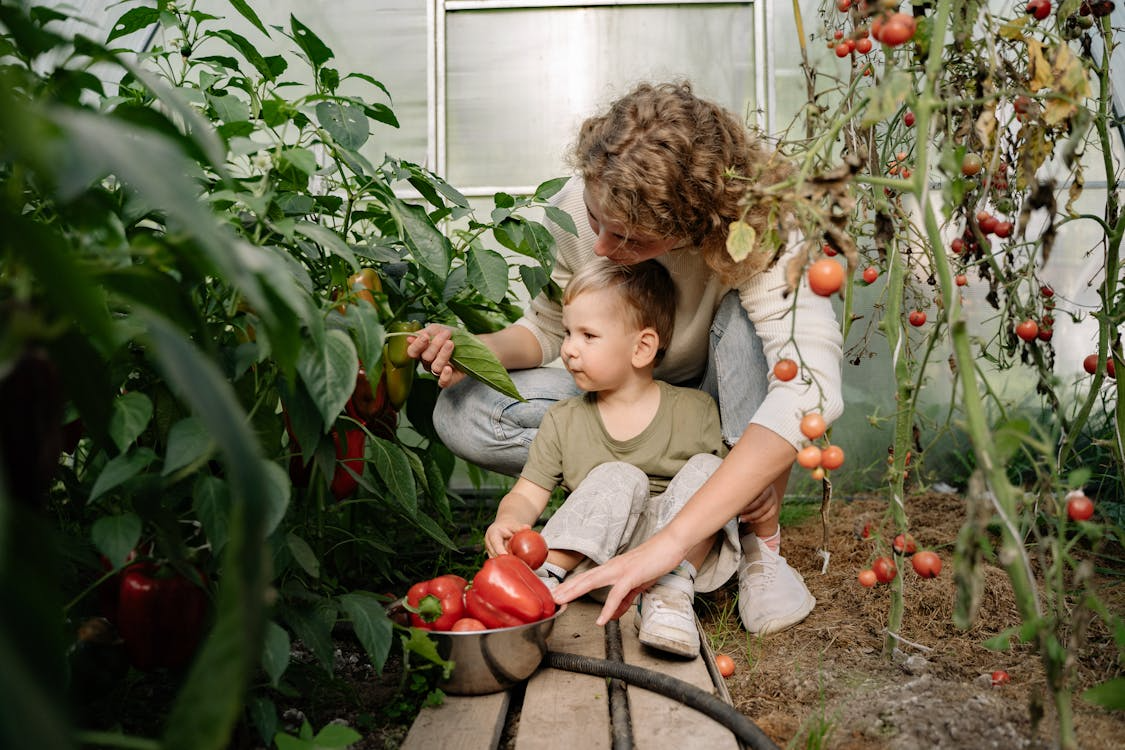
A garden is a wonderful place to teach a child responsibility and the value of a little hard work. You can get them involved with planting some vegetables or flowers, and let them be in charge of a small section of the garden. They could be responsible for watering the plants and making sure they have enough sun, and also teach them the names of each one and the variants. The dangers of mushroom picking and eating with abandon is a pretty good lesson to teach as well, for obvious reasons. This teaches them about the cycle of life and how to nurture something from a tiny seed to a full plant, while also learning how to stay safe in the wilderness. It’s also a fun way to get them outside, which, of course, is the whole point.
With this advice, we hope you can more easily teach your child homesteading with confidence.
This is a collaborative post.